Today in History

July 29: Cass Eliot passed away in London on this day in 1974 of a heart attack. Cass was one of the Mamas and Papas, a band that was unusual for the 60’s since they were all singers. (OK, I lied: John Philips played guitar.) Cass was a big girl and she had a strong voice that really anchored the band and gave it a unique sound. I’ve been humming “This Is Dedicated (To The One I Love)” all day. She was recording her own stuff after the band broke up but could never seem to get away from being Mama Cass. Gone at age 33.

On a happier note, Elton John is celebrating 25 years of sobriety. Many of his songs are part of my sound track from the 60’s, 70’s and 80’s.  He was a bit “out there” and with his performance costumes, and his lifestyle was subject to speculation for a very long time. It seemed to me that he was set to crash and burn, or parody Liberace in Las Vegas . Fortunately he got his act together and has become a role model, not only for sobriety, but for gay men and women. Thanks to (Sir) Elton we now have a growing LGBTQ community in Toronto and across the globe. And that’s a pretty wonderful thing. His openness about both his sexuality and his addictions is remarkable and courageous.

And he continues to make history one day at a time.
Pix

July 29: And for those of you who like to watch, I have the following sample of things I’ve seen in the first weeks….

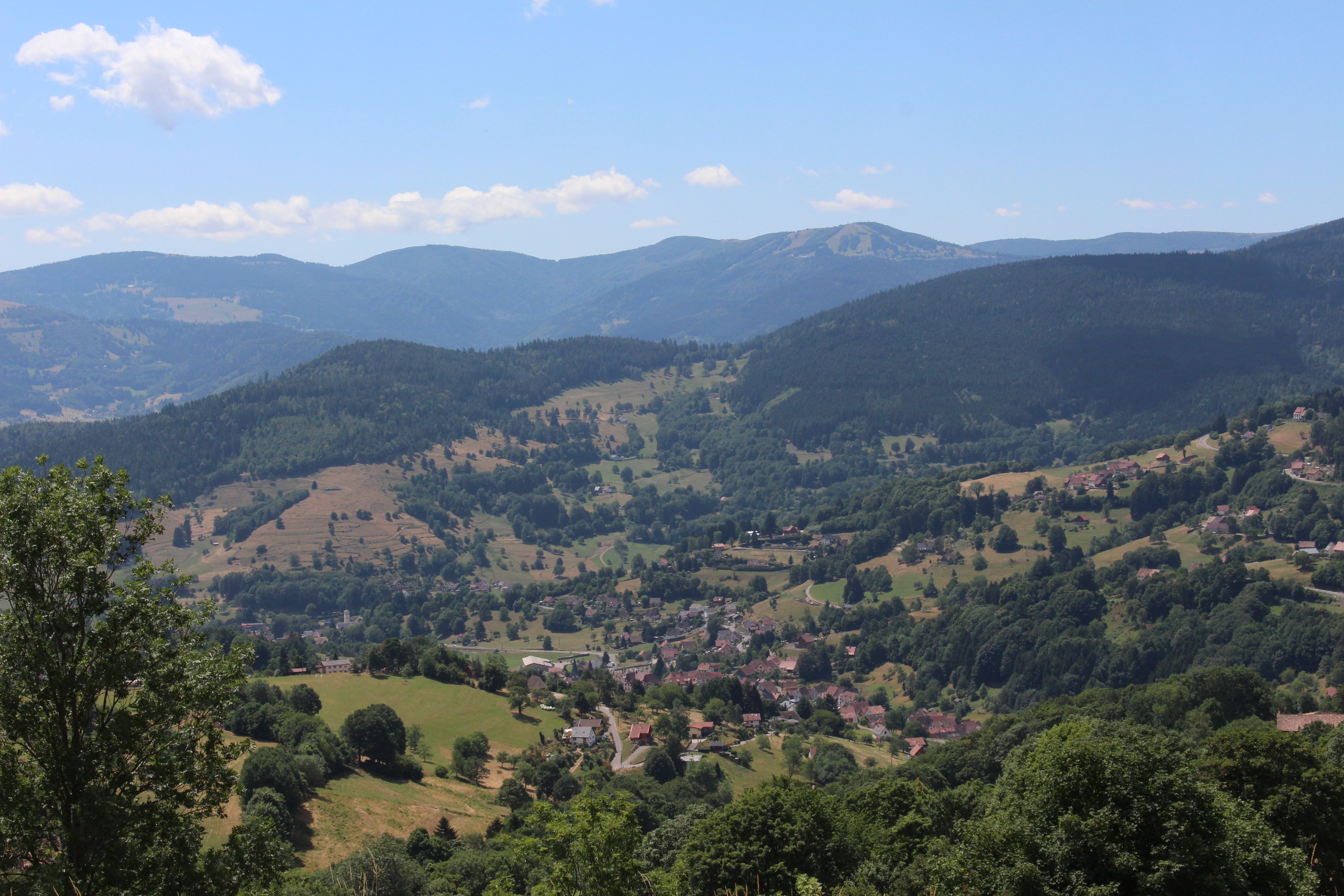
Col de la Schlucht: Near Colmar in Alsace, this is one of the passes used during the Tour de France a few years back. After the flat lands around the Somme, the peaks and forests were a real treat.IMG_0350

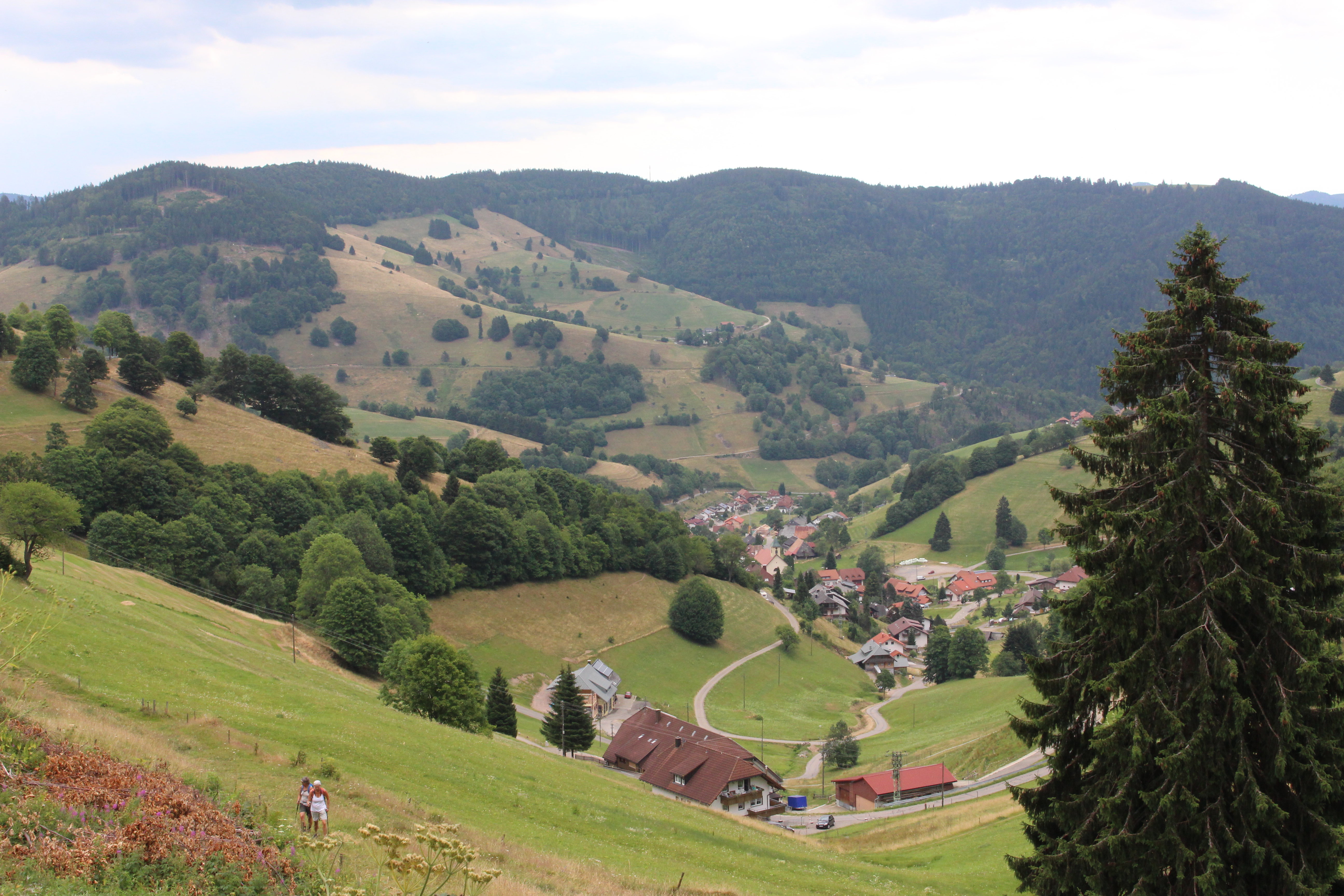
Black Forest: This area is the German equivalent to Alsace with pine forests and wine regions at the lower levels. It’s very well known among car and motorcycle fanatics as a place to visit for the twisty roads. And the wine, I suppose ….IMG_0392

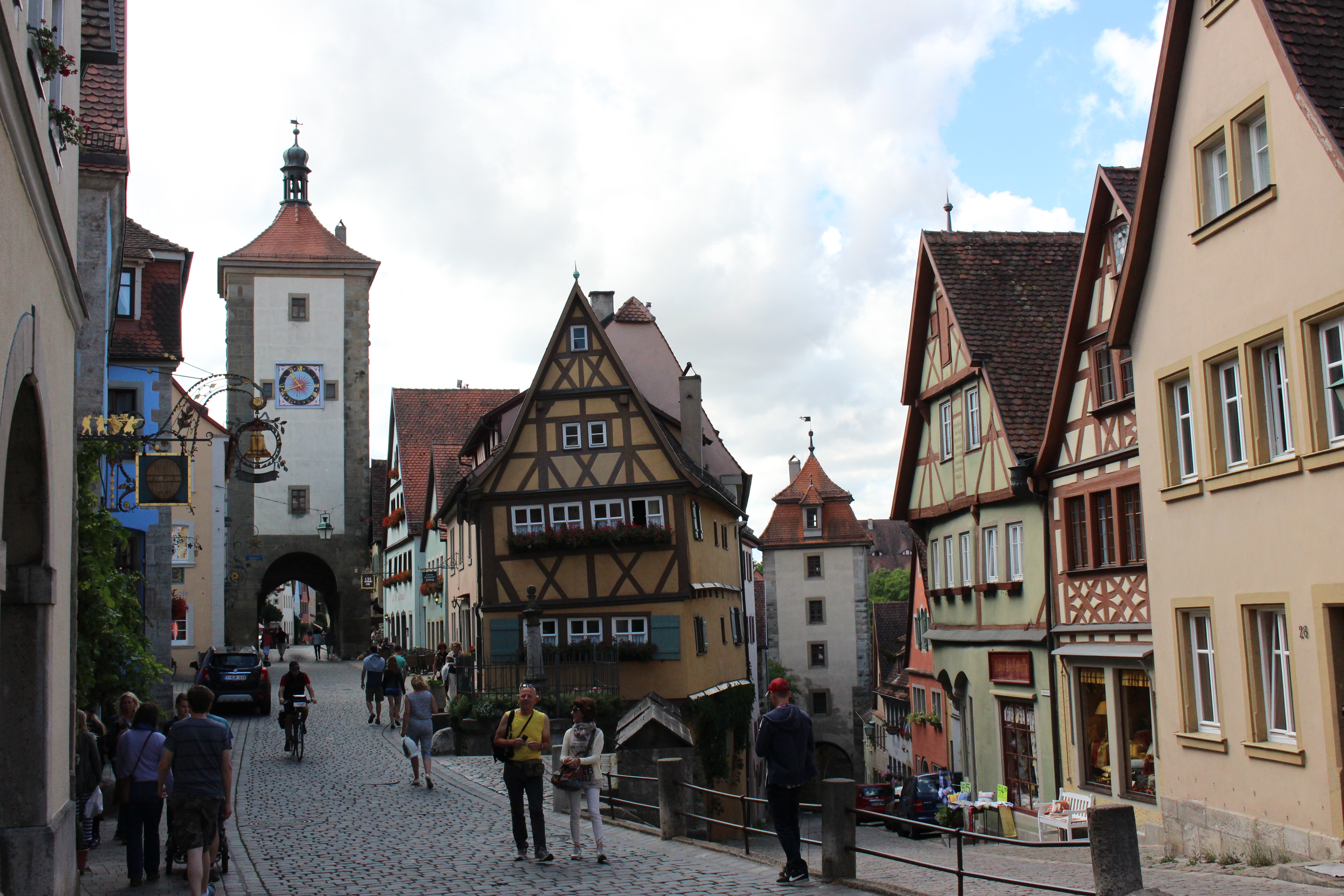
Rothenburg ob den Tauber: One of the villages along the so-called Romantic Road, it’s very pretty but also hugely popular so jammed with tourists. Think Niagara-on-the-Lake to the power of ten.IMG_0478

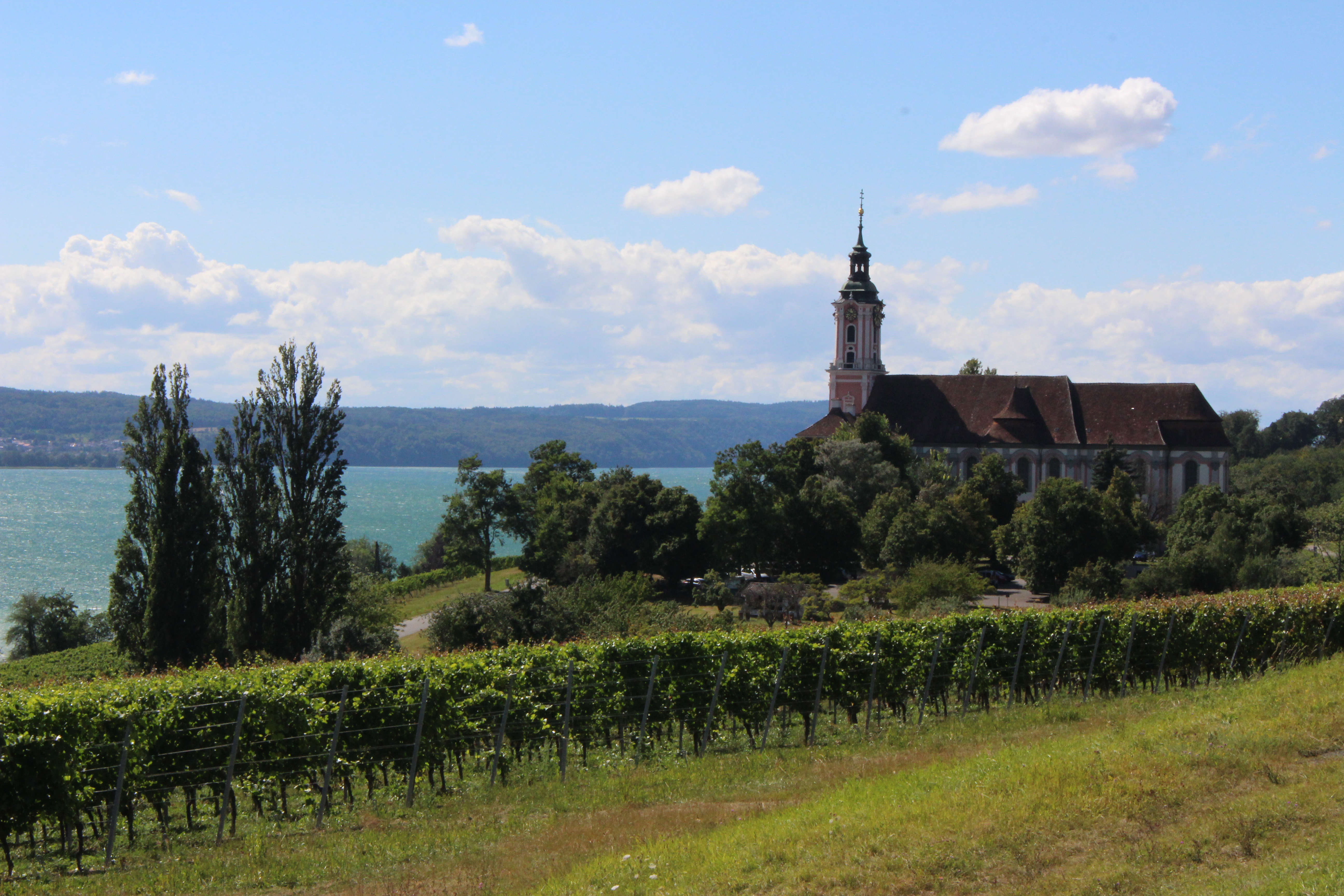
Meersburg: On the east shore of Lake Konstanz, which purists would call Bodensee, Meersburg is home to the regional wine school and about a million tourists. The opposite side of the lake is Switzerland and Austria lies to the south.

IMG_0566

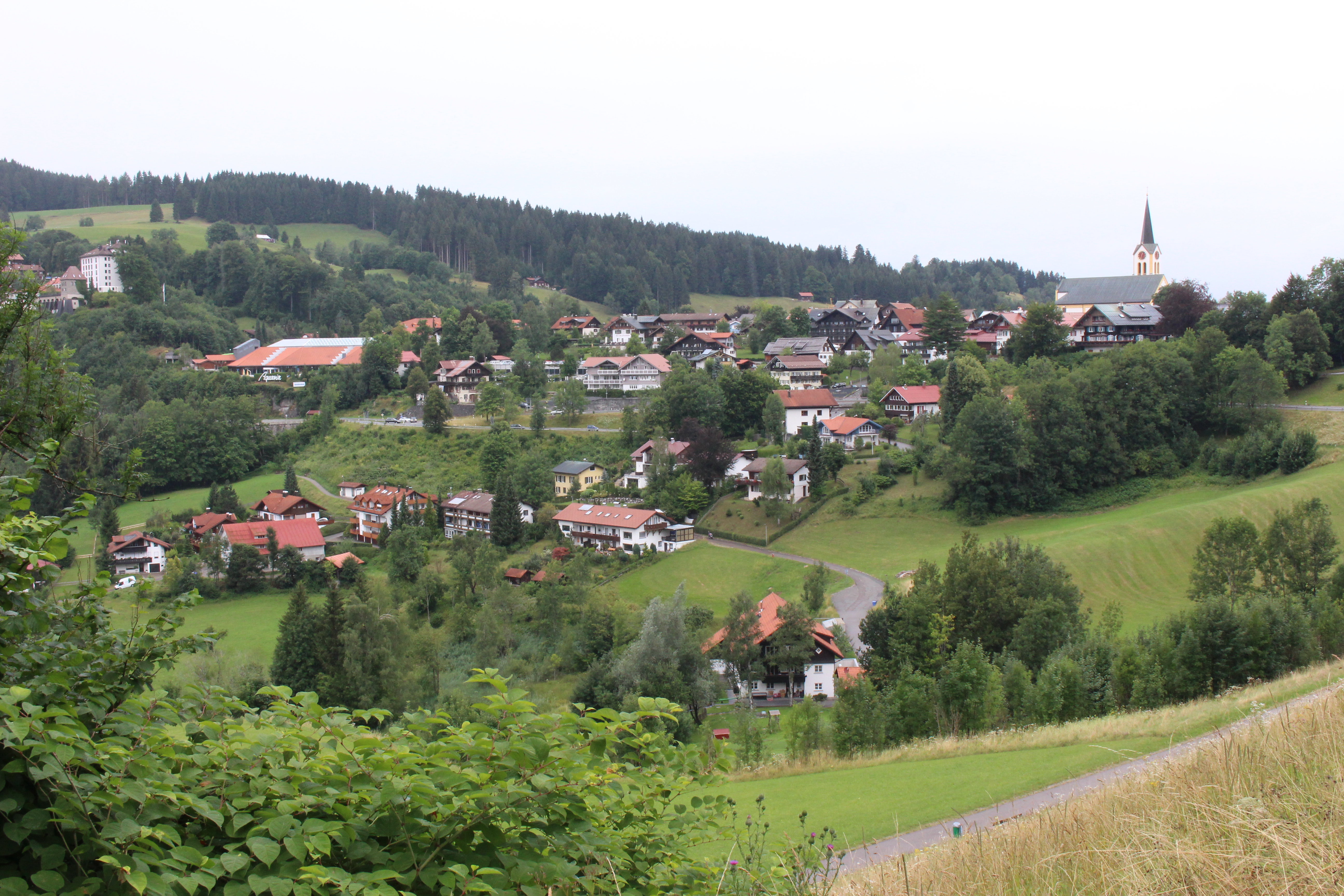
And finally, from earlier today, this view from the Deutsche Alpenstrasse which runs along the north edge of the Alps, right along the border with Austria. Unfortunately, the weather has turned rainy…IMG_0623

Random Thoughts

July 25: I have not travelled widely in Germany. I am finding a beautiful and friendly country with a strong culture and lots to share. At least part of the reason I haven’t spent more time here is the language. There’s something about words like thisisthedoortocomein that put me off. But I have found that people are generally kind; if you make the effort, there’s usually a shared vocabulary and pantomimes that get me what I want.

What is harder to accept is the loss of self that having no language brings on. Language is a powerful tool to convey who we are: our views, our experience and our sense of humour all convey important aspects of our character. Without a way of taking part in that social interaction through language we are isolated and cut off. I may get lunch and the outlines of what is going on around me but without a way to take part, I’m essentially an observer, and probably a bit suspect at that.

********

Where are the police ? Admittedly, I am travelling a little off the beaten path but I think I have seen perhaps 3 police cars in the last week. Living in a busy city and having been fed a constant stream of nonsense about imminent attack by radical weirdo’s by our beloved leader, I’m accustomed to routinely seeing police on patrol and in cars. Not so here. That said, there is an obvious and strong belief in the rule of law. When driving in the country, traffic moves at the limit and usually not a lot more, and when coming into even the smallest town, all of the traffic slows to bang on the 50 km/h limit (in some cases 30 km/h). There are no gangs roaming the streets and armed thugs driving Citroen Traction Avant aren’t robbing banks. People seem to be going about their daily lives in a peaceful way and society seems to accept that they can do that without the police watching their every move. Refreshing.

********

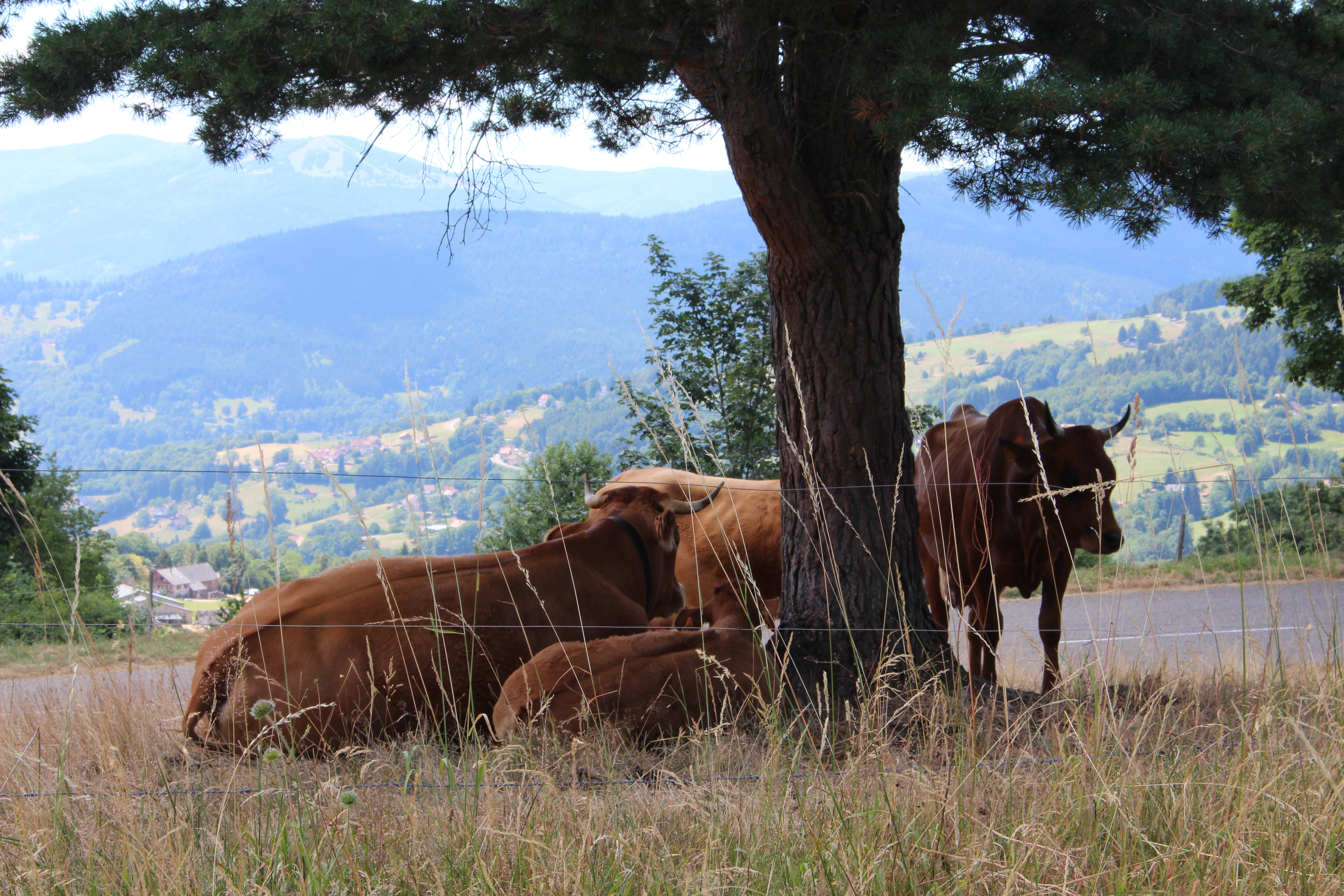
This part of Germany is quite agrarian, a fact with which my nose becomes intimately familiar several times a day. I can nowIMG_0351 say with certainty that cow shit smells the same here as in Canada. Like the old debate about whether German dogs would  understand Canadian dogs, I expected it to somehow smell different. If the French have terroir to describe how the growing conditions affect their wines from one clos to the next, wouldn’t the same be true of cow shit ? Cows eat terroir after all. Maybe my nose is not yet adequately attuned to the subtleties between one cow and the next.

Vimy

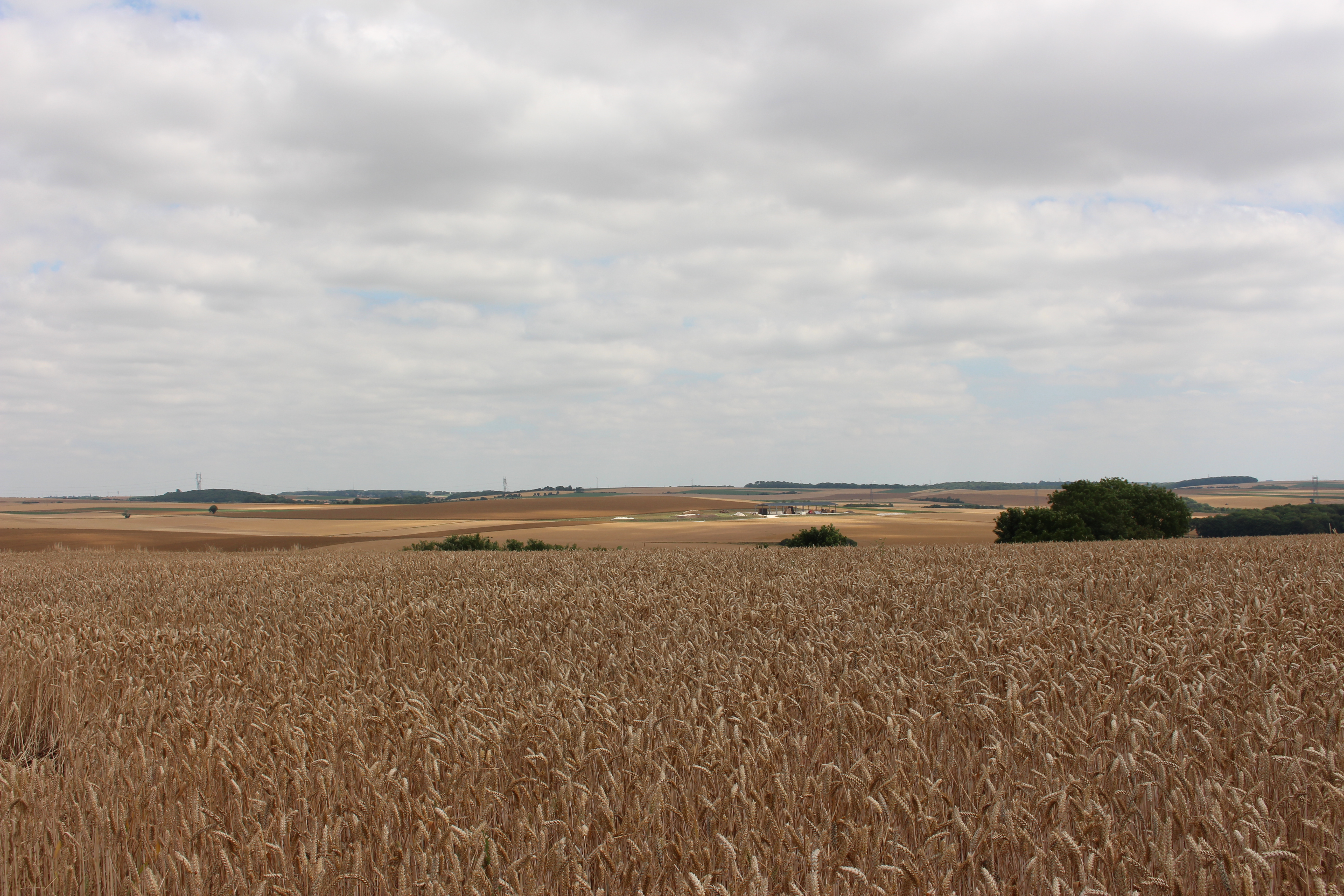
July 20: Many people call this area the “bread-basket” of France, and it’s easy to see why. The wheat fields extend to the horizon in all directions. A tennis ball dropped at your feet would go nowhere. So it’s easy to see why the invading Germany army expected a fast passage to Paris when they invaded in 1914.IMG_0249

For the first while, it went well for them (as wars go), and then the French battled back. At the Meuse they held a line and the long war of attrition began in earnest. As a boy I never understood “trench warfare”. If armies were constantly moving, when did they find the time to dig a 2 metre deep trench?

In fact, the front line barely moved during the 4 years of the war. The enemies confronted each other across no-man’s land and the slaughter continued throughout that time. It is said that this was the first “industrialized war”. New weapons appeared including machine guns, grenades, poison gas, tanks and gigantic flame-throwers. There is a very poignant photo in the museum at Albert showing troops going “over the top” standing fully upright, walking straight into machine gun fire. One wonders about their ability to follow orders when it had been clearly demonstrated that it was a deadly approach. One also wonders about the morality of continuing to send men to a certain death for days in a row, repeating a strategy that was obviously futile.

It is said that 4 million men – for it was virtually all men at that time – died during the war. A generation of scientists, artists, doctors and teachers lost forever. One wonders what they might have accomplished for the world had they lived.

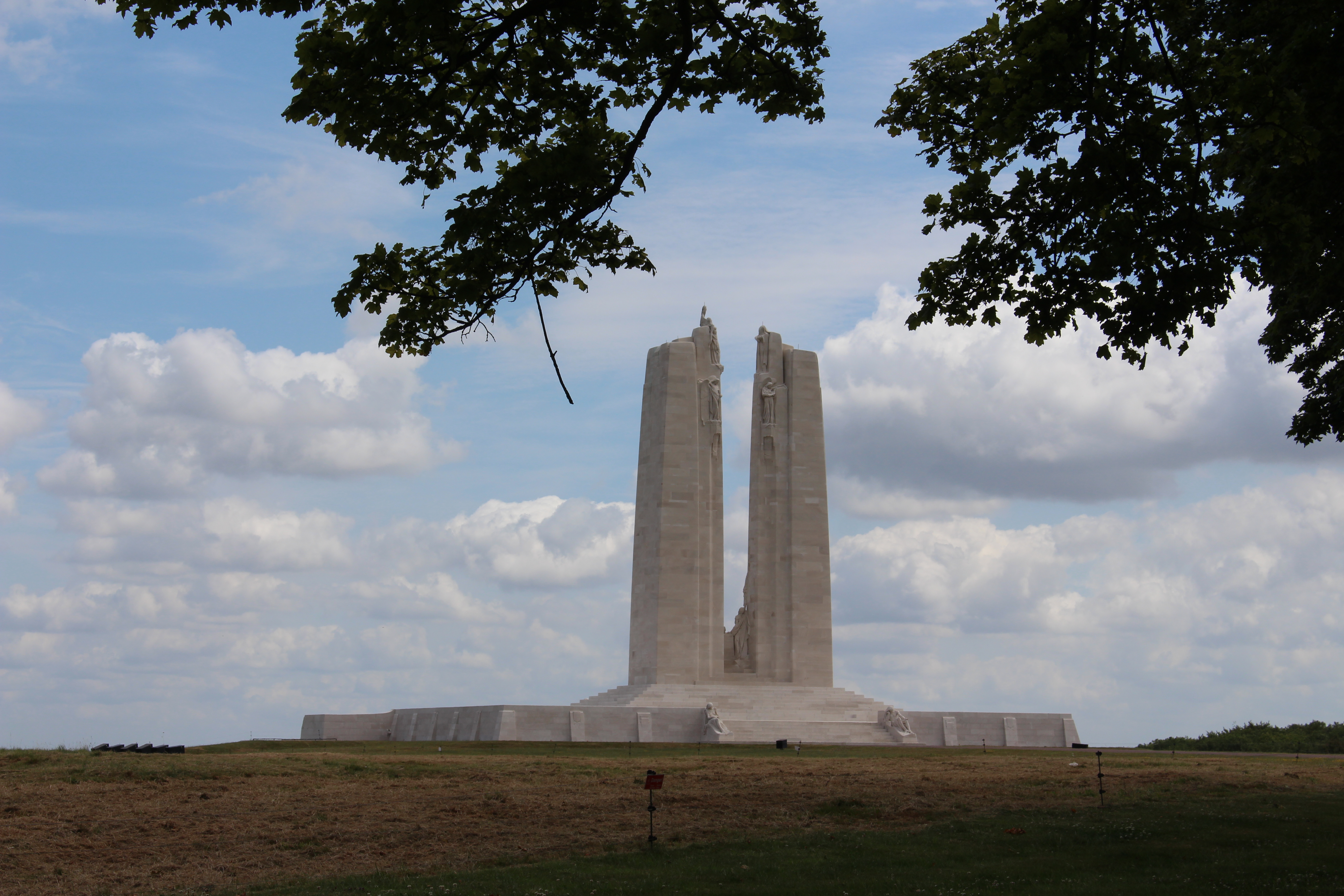
Canada lost about 60,000 men. The names of the battles are familiar: Ypres, Beaumont Hamel (where all but 68 men of a battalion of Newfoundlanders were killed), Courcelette, and of course Vimy. Each of these sites has it’s own monument and cemetery. It seems that there are cemeteries and monuments everywhere.IMG_0275

Canada’s national monument is at Vimy. It is tremendously emotional to visit the monument and see the names of these men inscribed on it’s four outer walls. Something I will not soon forget.

Auntie Em’

July 16: Well Toto, we’re not in Kansas any more. Sorry, in my sleep-deprived state, I couldn’t resist.

After talking about it for more than a year, after imagining what it will be like, after trying to contain my excitement and focus on the here and now, it feels a bit strange to actually be here. No more talk, no excuses.

I am still bemused by the fact that more people don’t see airline travel as something more than a cattle-call. It would all be so much more comfortable if people just treated each other with a bit more class and consideration. I thought of the old black and white photos of women in dresses and men in suits boarding a Super Connie as I watched one guy in a tank-top tee shirt and shorts, cut in front of a bunch of folks already  in line without the slightest bit of concern or shame. Class.

Much is familiar about France. I guess not a lot changes when your building stock is several centuries old. Somehow it seems more prosperous than when I was here last, but that may only be due to proximity to Paris. Something to consider as the days unfold.IMG_0222[1]

View from the hotel -first night.

Men In Tights

July 7: OK I’ll admit it: I have an on -going fascination with sweaty men in spandex. It happens every year about this time. Dozens of muscular bodies in peak condition pushed to the limit. For reasons I can’t fully explain, I find myself spending endless hours watching them; sharing their hopes, feeling their pain.

Yes, it’s time once again for the Tour de France.

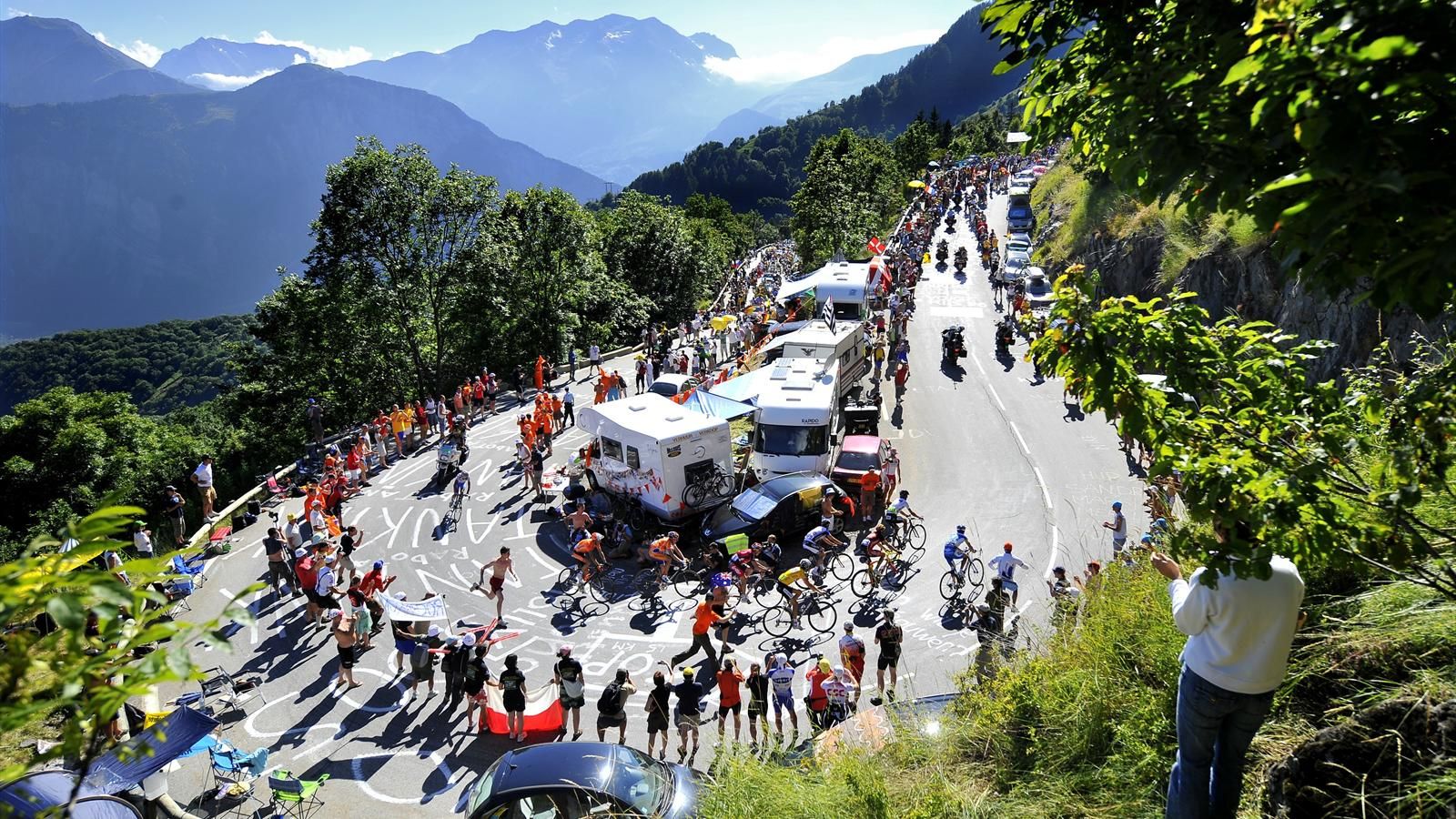
I struggle to explain the fascination to anyone who has not watched the live coverage. I was initially drawn in by the scenery. By it’s very nature, it becomes a travelogue as the race wanders across France – and in recent years Britain, Belgium, Netherlands and others too. The shots are lush and flattering to a beautiful country, and the commentary usually provides some basic information about the significant sites as they are shown.Tour

But the deeper fascination is with the pure physical reality of the race itself. This year it covers 3600 km more or less, in 19 days of riding. About half of those days will be stages where the riders literally climb mountains. A British rider famously died of heart failure on the climb up Mont Ventoux many years ago. This year the race started with an individual time trial in which each rider goes flat out over a fixed distance against the clock. It was won by Rohan Dennis who covered 13.8 km at an average of 55.44 km/hr. – the fastest time trial recorded to date on the Tour. Try doing that on your Schwinn…

And every year a rider, or riders, will dramatically break away from the peloton and establish a sizeable lead. Many times those riders are lesser-known or complete strangers to the limelight and they can ride at the front, enjoying the exposure that brings, for most of the stage. They are racing for the glory and for the recognition of a stage win – something they may never see again. In their struggle to stay ahead of the peloton I often see the “everyman against the machine” drama – will individual courage and hard work triumph over the masses? Usually, no. Virtually every break-away is caught, most often in sight of the finish, and the riders are denied their reward as they are swallowed up by the rest of the field with only meters to go.

It sounds trite but the human drama of the race makes for fascinating viewing. The fact that the actors are all wearing spandex only makes it more interesting – if you like that sort of thing…

http://www.letour.fr/us/