Alcohol

January 28: I have never understood people who say that beer is an acquired taste. I remember my very first beer – which was, in fact, my very first alcoholic drink – and I loved it. I had gone to La Rotonde, a bar in Lausanne, with fellow student and room-mate Paul Dubois. It was a warm and sunny September afternoon and the beer was a Swiss brand called Cardinal. In a year of big changes in my life, having the ability to drink was foundational, and that first drink started a life-long relationship with alcohol.
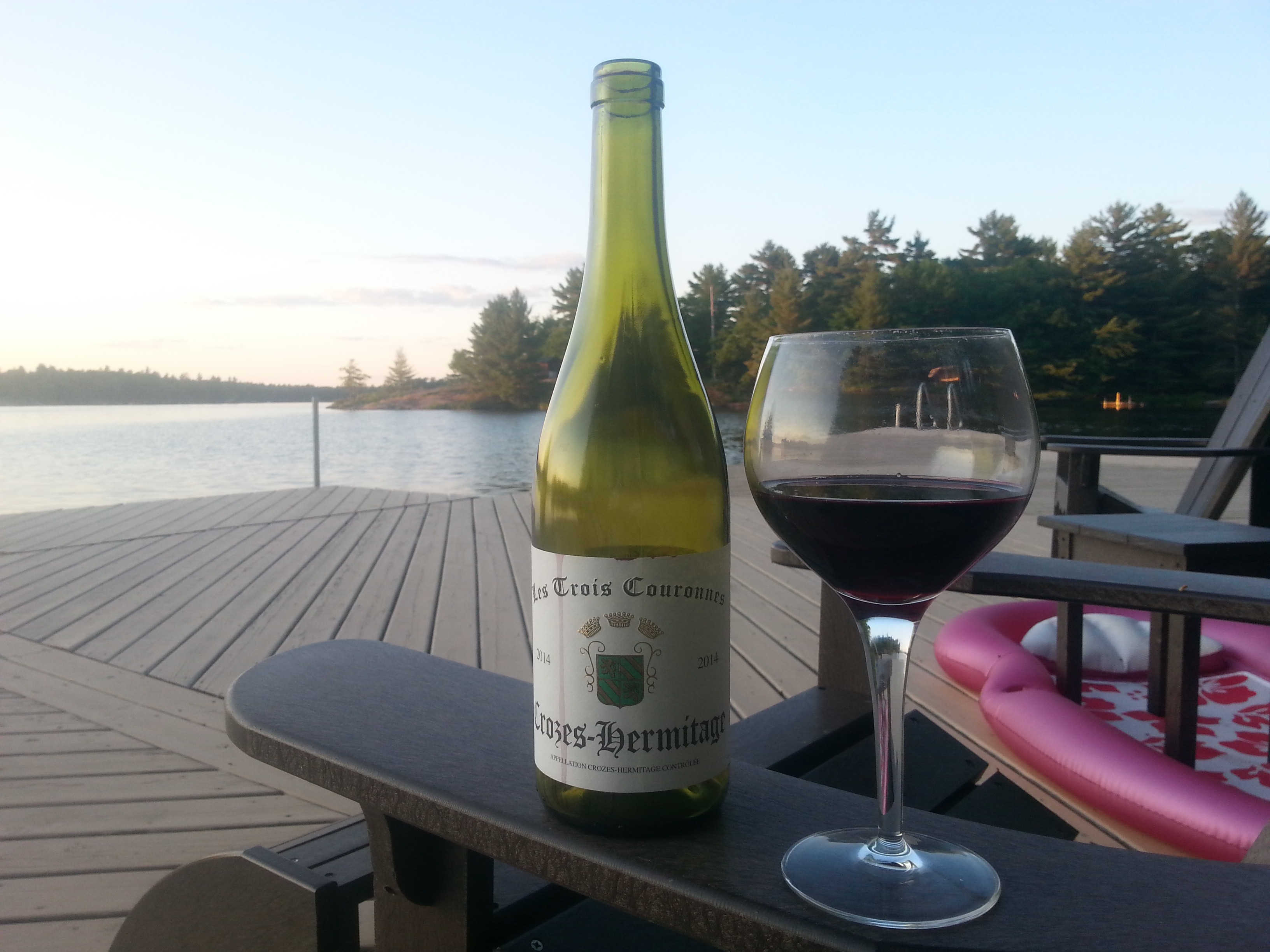
While I certainly enjoyed the taste of beer, I was seduced by the way that alcohol changed me. I became more self-assured and out-going. I was less fearful of appearing to be “less than” and more willing to take chances. I was more sociable and able to interact with people – especially women – much more easily. I broke out of my shell a bit during that year in Lausanne and a lot of the credit goes to alcohol.

Several years later I was gainfully employed and began passing time with one of my work mates at Joe Bird’s, a bar on Yonge Street. I was young and single and had enough money to enjoy some nightlife. Roger was my mentor and we spent many nights hoisting beer, trading stories and killing brain cells. It was a gathering spot for many people from our workplace and we were ring-leaders of a sort. Alcohol facilitated many adventures and encounters that would have otherwise been unlikely or perhaps impossible. Alcohol made it easier to socialize, to be outgoing and funny. Sadly, it also made it easier to engage in self-centred and hurtful relationships with women, some of whom may have been genuinely fond of me. While I now think I understand why I was behaving in that way, I still deeply regret the effects my behaviours undoubtedly had on others during that time.

My marriage to Melinda was in many ways fueled by alcohol. We met in Joe Bird’s over beers. Our entertainment was to enjoy a good meal and have a bottle (or two) of wine and some liqueurs. During the last few years we were together, I enabled her drinking partly because I wanted to have company when I was drinking. My behaviour was often structured around my relationship to alcohol rather than a more constructive and mature approach focussed on saving our marriage. She deserved better.

Recently, I have been drinking most days. I do enjoy a glass of wine, but there is always the temptation to extend that into another glass, and another glass…. I often drink because I am lonely, or I drink because I am bored, or I drink because I am unhappy. None of these is a good reason to drink, and with that in mind, I decided to have a sober January. While I did not notice a significant change in my health, I did feel “sharper” and more able to focus on things that were important to me. I became very aware of the amount of time and money I spend drinking.

When I had the first drink after about 3 weeks of abstinence, I immediately noticed the effects of alcohol: my balance was slightly off; my attitude, which was at first more relaxed and happier became sadder and more introspective. Old habits returned. I began day-dreaming and making grandiose plans for the future. It was all very familiar and very comfortable because I have become so used to having alcohol in my life.

Alcohol is literally a poison. It is carcinogenic and highly addictive. It damages our liver, our brain and nervous system, our pancreas. Yet we welcome it into our lives. We use it to socialize and enjoy it as part of our daily life. I am coming to believe that I need to treat alcohol with much more respect, not because I feel that I am at risk of becoming an alcoholic, but because I would rather not have my perceptions and abilities constantly altered by its effects. Like any relationship, this one needs to be re-evaluated. I need to be sure that my use of alcohol is consistent with the other things I want to do in my life: to be present, to be creative and to be healthy.
Hands Up ….

January 16: Last week, the US Justice Department released a report on the use of excessive force by the Chicago Police Department (CPD), the third largest force in the United States. The report was initiated in December 2015 following the shooting of Laquan McDonald which was captured on the dash-cam of a CPD patrol car. He was shot 16 times while walking away from a patrol car with a small folded knife.

The Justice Department investigation found “that CPD officers have engaged in a pattern or practice of using force, including deadly force, that is unreasonable… This pattern or practice includes shooting at fleeing suspects who presented no immediate threat; shooting at vehicles without justification; using less-lethal force, including Tasers, against people who pose no threat; using force to retaliate against and punish individuals; and, using excessive force against juveniles.”

In addition, the report concluded that “the following practices contribute to the pattern or practice of excessive force: failing to effectively de-escalate situations or to use crisis intervention techniques to reduce the need for force; employing tactics that unnecessarily endanger officers and result in avoidable shootings and other uses of force; and failing to accurately document and meaningfully review officers’ use of force.” All of this got me wondering whether CPD is just a “bad actor”, or whether the issue is more widespread.

As context, in October 2015 the U.S. Department of Justice, Office of Justice Programs, Bureau of Justice Statistics (BJS) reported that “from 2003 through 2009, BJS obtained reports on 4,813 such deaths through its Arrest-Related Deaths (ARD) program. About 3 in 5 of these deaths (2,931) were classified as homicides by law enforcement personnel. The remaining 2 in 5 deaths were attributed to other manners, including suicide (11%), intoxication deaths (11%), accidental injury (6%), and natural causes (5%). In three-quarters (75%) of homicides by law enforcement personnel, the underlying offense of arrest was a violent offense.” Shockingly, the report points out that these numbers represent about half the number of incidents (deaths) that were anticipated. The report identifies 689 citizens that were killed by police in 2011 (last year of data), while the Washington Post reports 963 in 2016 – almost 3 people each and every day.

According to a report in the Chicago Guardian, data compiled by the Chicago Tribune indicate that “there were 435 police shootings in Chicago from 2010 through 2015, in which officers killed 92 people and wounded 170. In all, officers fired 2,623 bullets…. “While a few of those incidents captured widespread attention,” the Tribune wrote, “they occurred with such brutal regularity – and with scant information provided by police – that most have escaped public scrutiny.”

I am not a statistician, but it seems that data on killings by police across the US are inconsistent and some sources may compile data based on their particular mandate or ideology so what follows may need to be treated with some caution. mappingpoliceviolence.org concluded that 59 of 60 of the nation’s largest city police departments killed civilians in 2015. The national rate was 3.6 killings per million citizens; Chicago ranked 47th on the list, below the national average at 2.9 killings per million. The top 3 were Bakersfield (13.6) Oklahoma City (12.9) and Oakland (12.1). Disturbingly, in some large cities 100% of victims were African American including St. Louis (9.5), Atlanta (6.6), Kansas City (6.4), Cleveland (5.1) and Baltimore (4.8). So, far from being an isolated example, CPD seems to be typical of  US-style policing.

How does Canada compare ? In 2015, the London Guardian compiled a data base tracking police shootings globally. As part of that effort, it reported that Canadian police shoot an average of 25 people per year; California (with a comparable population) had 78 police killings in 2015 alone. We are fortunate that, at least for now, the context for police shootings in Canada is very different. Strict gun control laws and less focus on the “right of the individual to bear arms”, combined with a more multi-cultural society reduce some of the tensions so evident in US policing. But, as we saw with the shooting of Sammy Yatim, Toronto police are not immune to acts of violence. We should not be complacent about how we are policed.

The police are the point at which the institutions of society (the law-makers, the judiciary) interact with citizens. As citizens we entrust the police with the right to act on our behalf to ensure the “peace, order and good government” that we cherish. We surrender certain rights to them with the belief that they will act lawfully and reasonably on our behalf. I am astounded at the rate of shootings in the US, and the attitude of many police services that they “had to shoot” to protect themselves when actual threats may have been minimal or non-existent.

It concerns me that police forces in Canada see US-style policing as “the benchmark” and seek to emulate those practices here. Police are trained to “force compliance” as opposed to seeking to defuse volatile situations. As a result, it appears that more weaponry is often the answer when more open, community-focussed policing might be more appropriate. Rather than Balkanizing society – us against them – now is the time for the police to be more inclusive.


https://www.justice.gov/opa/pr/justice-department-announces-findings-investigation-chicago-police-department

https://www.bjs.gov/content/pub/pdf/acardp.pdf

https://mappingpoliceviolence.org/2015/

https://www.theguardian.com/us-news/2015/jun/09/the-counted-police-killings-us-vs-other-countries


Cool Runnings

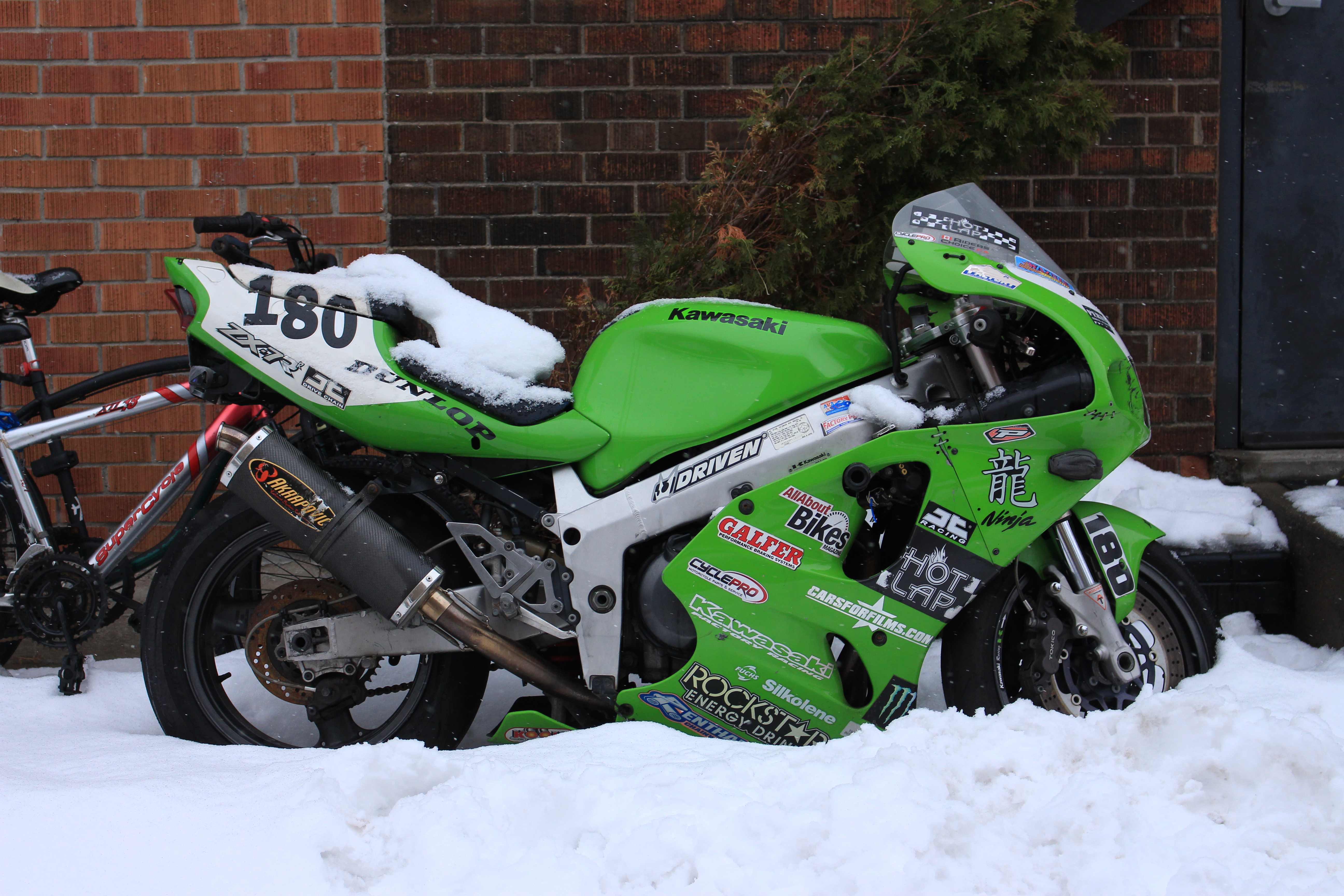
January 13: I was out with my running buddies on Wednesday night when I heard a sound that I recognized immediately even though it was completely incongruous. It was the sound of a large-displacement motorcycle with an after-market pipe.

A travesty ….

Granted, it was +2C and the roads were clear and mostly dry. Although it was a bit cool, it was a great night for a run.  With a couple of layers under my jacket I had a sweat going by the time we reached Church Street and the bike turned up. I know from personal experience on a motorcycle that anything below about +5C gets pretty cold pretty fast, since you are essentially sitting motionless in a blast of cold air – they don’t call it “wind chill” for nothing. So riding around at +2C seemed to be pushing things a bit.

Then again, people often do things – like running in the snow and ice – because it’s fun and, I suspect, to prove the point that they can do it. Winter is not my favourite season, so going for a run is a way to get out, get some exercise, and prove (at least to myself) that I can overcome winter for a short while. Riding a bike at +2C is a way of proving the same point, while keeping alive the fervent hope that spring is not too far off.

* * * * *

This being Friday January 13th, about 3,000 people proved the point and journeyed to Port Dover for the Friday the 13TH Ride. While not all of them rode motorcycles, many did including one guy who brought his dog in a sidecar. Maybe the guy on Church Street was just doing a shake-down run getting ready for the run to Port Dover ….

Short-sighted ?

January 2: Here’s a link to an interesting piece by Marcus Gee from the Globe and Mail wherein he laments a lack of vision in city planning and the resulting cost to taxpayers. There’s little doubt that as a city, we are now paying the price for not being more aggressive about installing, rebuilding and maintaining our infrastructure, particularly roads and transit, but also public spaces and housing. Toward the end of his article, Gee asserts that this might have been avoided had the (city) planners been more visionary and actually built some of the facilities he mentions. Unfortunately, I think this repeats a common misperception: that city planners (and other city employees) have the authority to make these decisions.

Forgive me for being defensive, but the reality is that planners make recommendations to City Council which then makes decisions on behalf of their constituents. It’s a failing of our system that most members of City Council are focussed on getting elected next term and are therefore averse to making longer-term decisions that might diminish those chances, especially when those decisions may also cost taxpayers a lot of money. One need only look at the back-and-forth decision-making around the downtown relief line – something I think everyone would accept as being desperately needed – to see that process in action. Recommended literally decades ago, the DRL is still up for discussion. Perhaps we need to start holding our Councillors accountable for the mess they have made and stop trying to hang it all on City staff.

http://www.theglobeandmail.com/news/toronto/short-sighted-city-planning-continues-to-cost-toronto/article33460988/