Hatred

October 25: The following is from an opinion piece written by Jared Yates Sexton that appeared in todays’ Globe and Mail. He is an associate professor at Georgia Southern University and the author of The People Are Going to Rise Like the Waters Upon Your Shore: A Story of American Rage. He writes about the attempted bombings of CNN and Democratic party officials.

“We now sit in terrible expectation of tragedy, and all because a portion of the country has been force-fed lies and rumours designed to keep them angry and complicit in politics that never serves their actual interest.

Mr. Trump, our conspirator-in-chief, owns no small portion of the responsibility. He has made his career on scapegoating the Clintons and hinting at the more deranged conspiracy theories peddled by fringe media. He cut his political teeth framing Mr. Obama as a foreign-born infiltrator, at times hinting at the possibility he could be intentionally subverting the United States. In nearly every speech he gives, he points to the reporters and journalists doing their jobs and calls them the scum of the earth and the enemy of the people.

I’ve met my fair share of pundits who believe this is all a ruse by Mr. Trump to create a binary world in which it’s Him vs. Them. Certainly it’s gotten him this far, so there is a validity to the strategy, but at what cost? Mr. Trump has continually fueled dangerous rhetoric that spins a story of a world with shadowy figures operating at the margins, a massive conspiracy that is funded by Mr. Soros, led by the Clintons and Obamas, spearheaded by the Democratic Party and carried out by a complicit media. In this world, this treacherous and perfidious world, the United States is a country under siege. The borders are open and we’re vulnerable to attack. And these people, the very same ones who were destined to receive bombs in the mail, are complicit.

It’s a lie, a shoddy lie at that, but it does more than inflame passions and inspire people to the polls. It inspires them to take action. It inspires them to grab their gun and pull the trigger. It inspires them to send bombs. It inspires them to declare war and murder and terrorize and erase any facet of free society until all that is left is the dull shade of fear and unadulterated fascism.

We live in a new world now, a world where the cold war of American politics has transformed into a live combat zone. The message has been received. Mr. Trump’s and the Republican Party’s base has heard them, loud and clear.”

https://www.theglobeandmail.com/opinion/article-make-america-hate-again-when-political-rhetoric-turns-violent/
So…

October 15: I have been home almost a month now, and some random thoughts from the trip stand out in my memory:

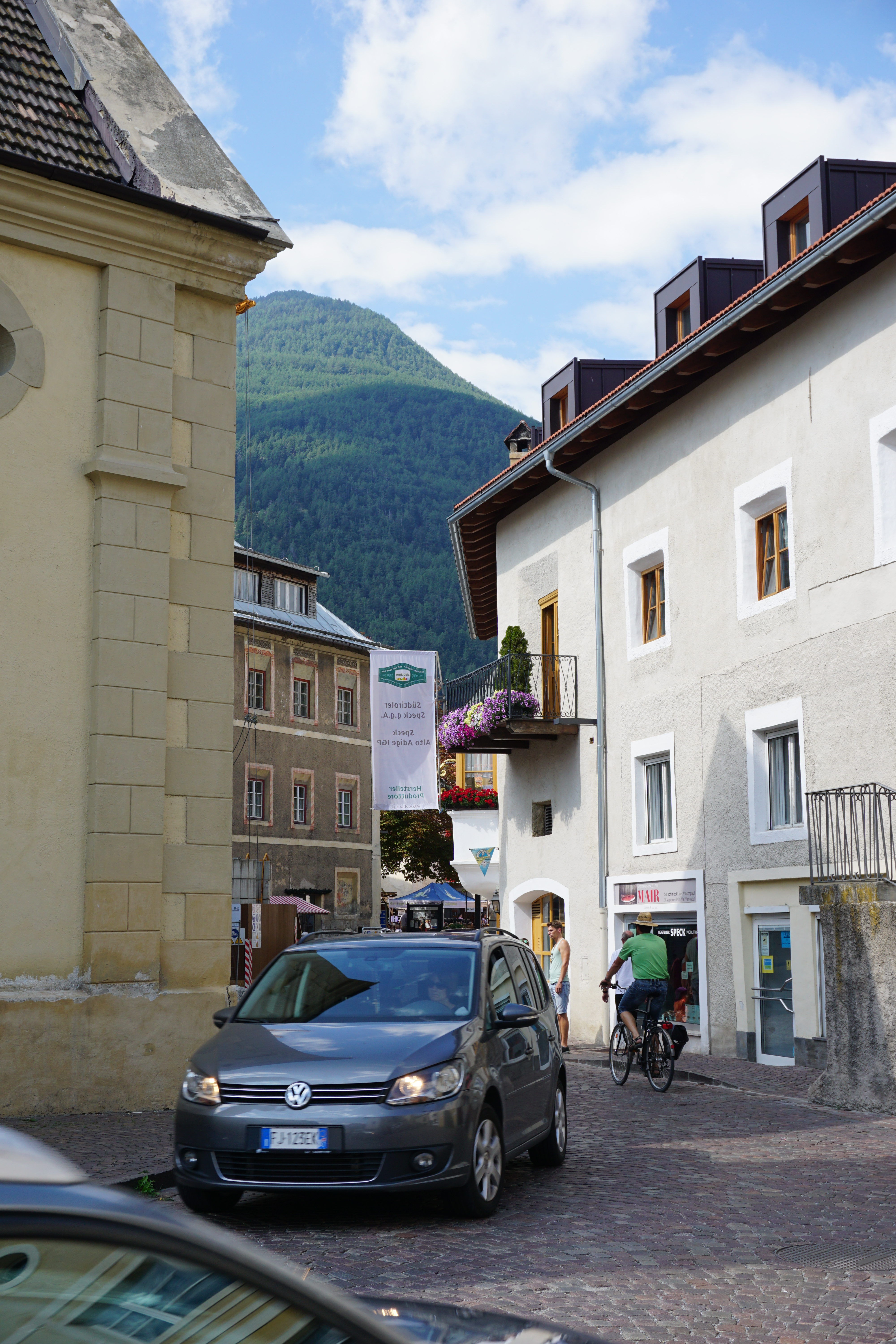
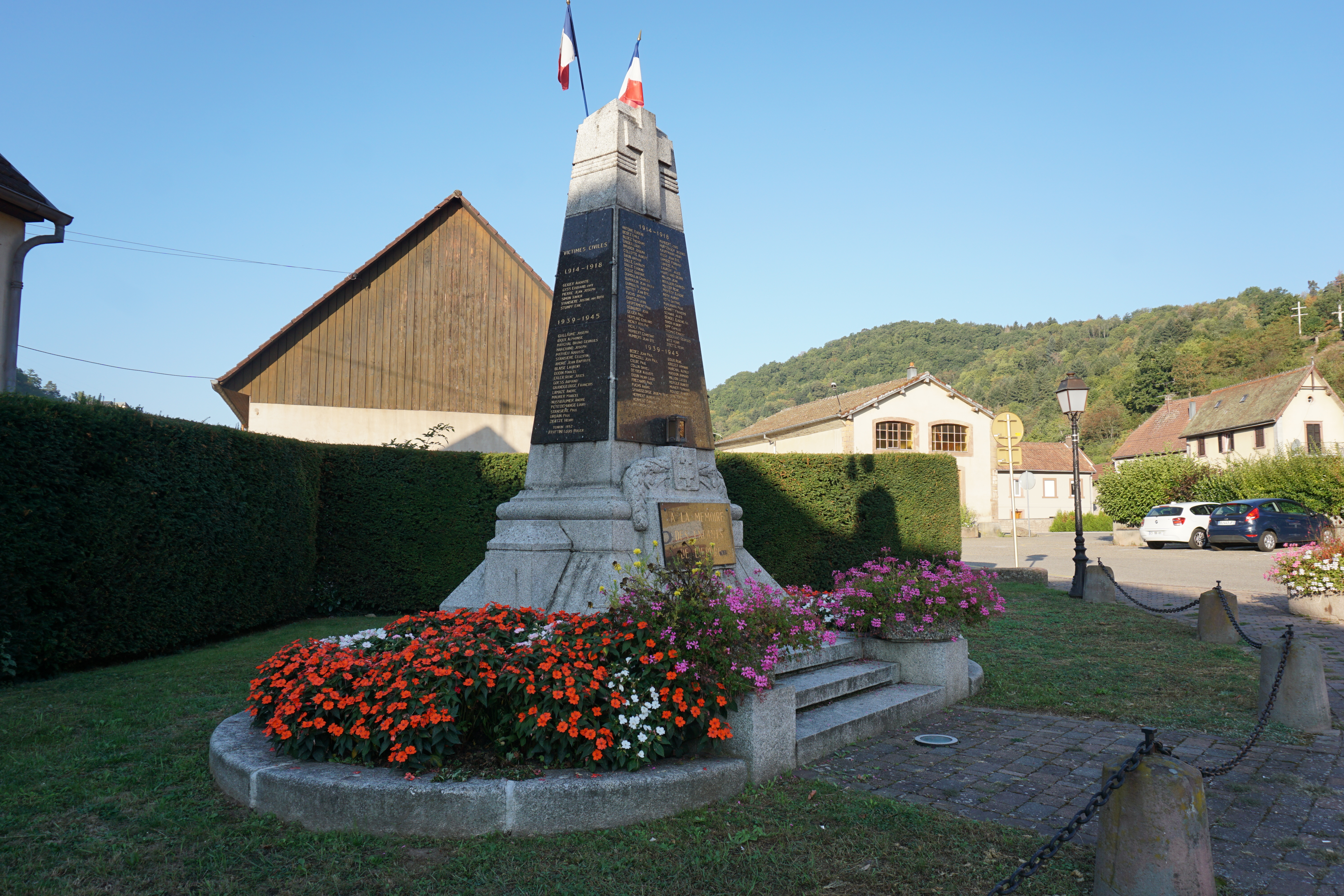
In 2015 I began my journey in Albert, close to the First World War battlefields. Visiting the site of those battles, and seeing the cemeteries devoted to those that had fallen there made a huge impression on me. Until that point, the killing and the scale of the slaughter had been abstract. Since then, in virtually every town I have visited in France, I have found a memorial to those killed during that war. It is sobering to see the number of names – often with the family name repeated – to understand the impact that loss must have had on the town. For example, this is a marker in Liepvre in Alsace, an area heavily impacted by the war. There are almost 40 names inscribed as victims of the first war. In 2015, the population of the town was about 1700 people. If that was the case during the war, the loss of so many sons and brothers and fathers in a town that size represents a whole demographic lost to a senseless slaughter. It is staggering and repeated across the country.

* * * * *

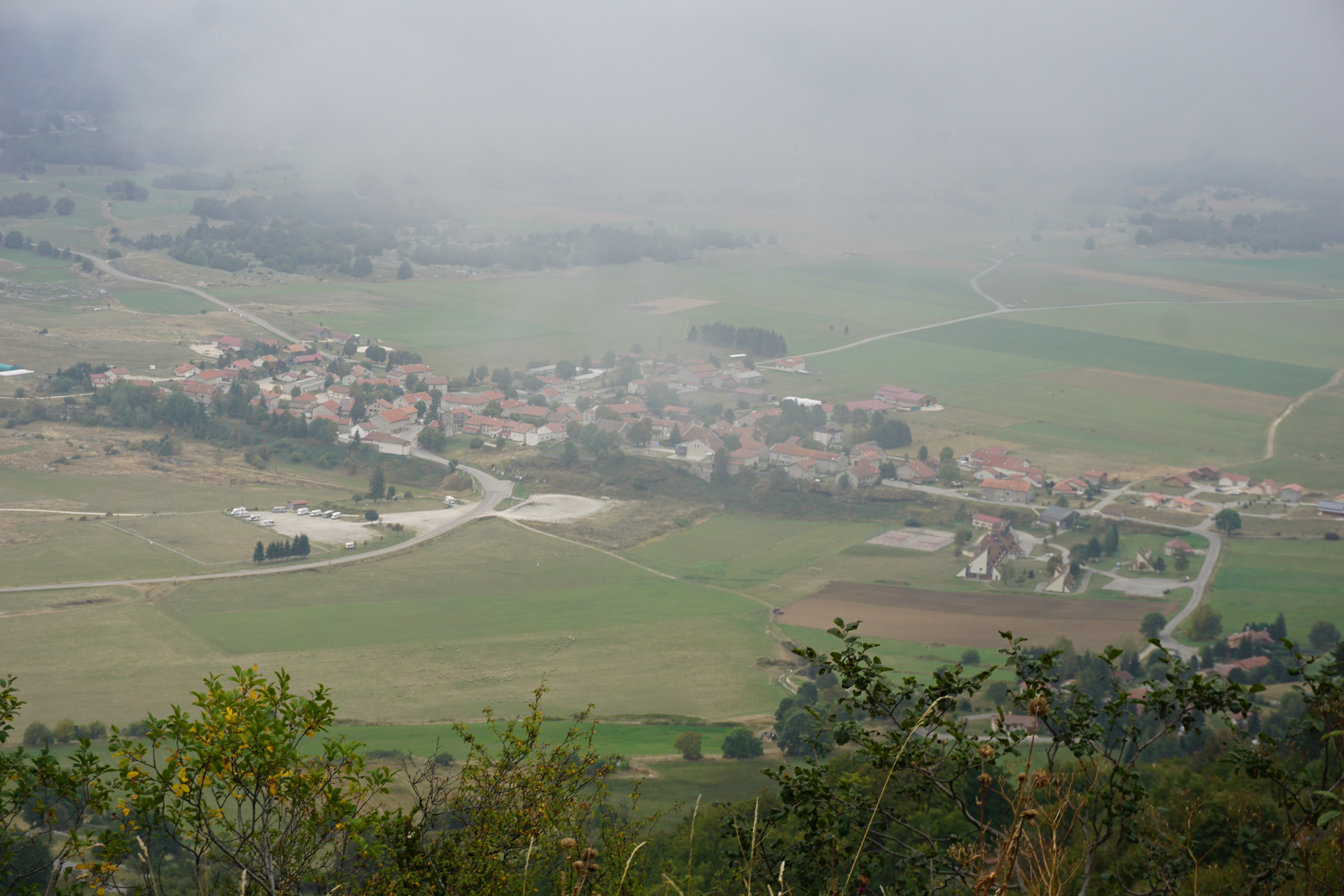
On a lighter note: I often came upon camper vans trundling down some winding back road, usually at the head of a long line of cars and trucks trying to find a place to pass. In most cases, they were driven by middle-aged to slightly elderly Brits, although the Dutch seemed to be a close second. You would see camps of these things huddled together at barren campgrounds on the edge of town, as here in Vassieux-en-Vercors. Almost inevitably, the builders of these things calls them Sprinter or Gazelle or Ephemera as if these names somehow camouflage the fact that these are the lumbering, mouth-breathing cretinous relatives of real vehicles. It’s like the 300 lb guy in spandex that everyone calls Slim – it just doesn’t work.

* * * * *

I could – and probably will at some point –  go on at length about the impressive driving skill of European drivers. There is a mis-perception that most Europeans are worse drivers than North Americans. I think that is because Europeans are more assertive when driving: they drive faster and maneuver closer than we usually tolerate here. The cars are smaller but the roads are narrower, so more skill is needed. And more patience and respect. They treat pedestrians and cyclists in an exemplary fashion.

In the entire 2 months I was in Europe, I think I heard car horns – in anger – perhaps 5 times. When I came home, I started hearing horns every day. Drivers here are slow and inattentive. They do stupid and inconsiderate things and ignore the danger they place on other drivers. And I have noticed that among the worst offenders are Uber drivers. It must be a job requirement. Give me a Frenchman pretending to be Alain Prost any day.

* * * * *

By The Numbers

October 5: I’ve now been home a week and have crunched some numbers related to the trip.

I arrived in Europe on July 26 and departed September 26 for a total of 62 days. I was on the bike for 39 days and covered 7,416 km for an average of 190 km per day – roughly the same as a trip to Bracebridge. Although there are a couple of longer days hiding in there, the average highlights the fact that you don’t need to travel very far in Europe before the context changes into “something new” worth investigating. This year I included a short loop through Austria and northern Italy which were really enjoyable and accounted for many of the mountain passes I crossed. Although I didn’t count them all, I suspect I tallied more than two dozen above 1500 metres including well-known routes like Val d’Isere, Galibier, and Col de la Madeleine.

I managed to get out for a run 16 times – less often than I had hoped. That happens here too, so I feel pretty good that I actually got out on those days. Strangely, I only ran once during the 10 days I was together with my friends from the Running Room at the house in Velleron and in Paris.

The total cost of the trip was $16,400 or $265 per day. This includes airfare; bike storage, service and insurance; my share of the rental of the house in Velleron; transportation to Paris and back from Avignon; car rental in Velleron; and, daily expenses during the rest of the trip (including hotels, fuel, food and accommodation). With some care, this might have been marginally less. However, I suffer from saying “why not ?” when an attractive hotel or restaurant appears and I feel like a treat. I rationalize this extravagance by thinking that the room or restaurant will be less expensive next day, although it seldom works out like that consistently. That indulgence may also be at least partly to blame for the additional 2 kilos of weight that I am now trying to shed. There is something addictive about baguette that makes it impossible to resist at every meal.

So there you have it: Europe on $300 a day or less. Not cheap, but full of memories that will last forever.