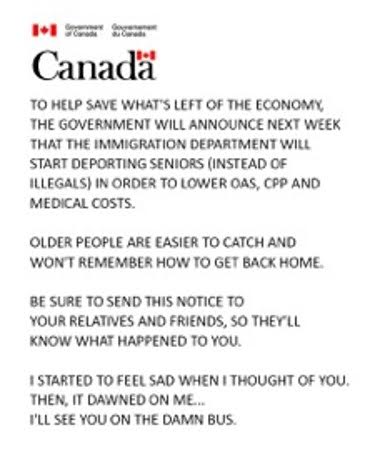
April 19: As we enter the sixth week of our mandated regime of physical distancing and staying at home, thoughts are turning to a time when we will be released. At first, being forced to stay indoors was refreshing. It offered unlimited time to undertake all those projects that are waiting on the “to do list”. Much could be accomplished with time; new avenues and interests could be explored. Of course, most of that remains undone or unexplored, and the extended time alone has become tedious. And now as some of the numbers of infections and deaths are trending lower, talk at the political level is messaging a “return to normalcy”.
My sense of this, not being an epidemiologist, is that we will have allow people and businesses to return to operation in phases timed to coincide with tangible improvements in the rate of decline of the virus. Knowledgeable experts (i.e. not me) stress that it is not acceptable to allow that process to continue if the rate of (re)infection rises. This will need to be done carefully and with a good dose of social restraint and testing if it is to be successful.
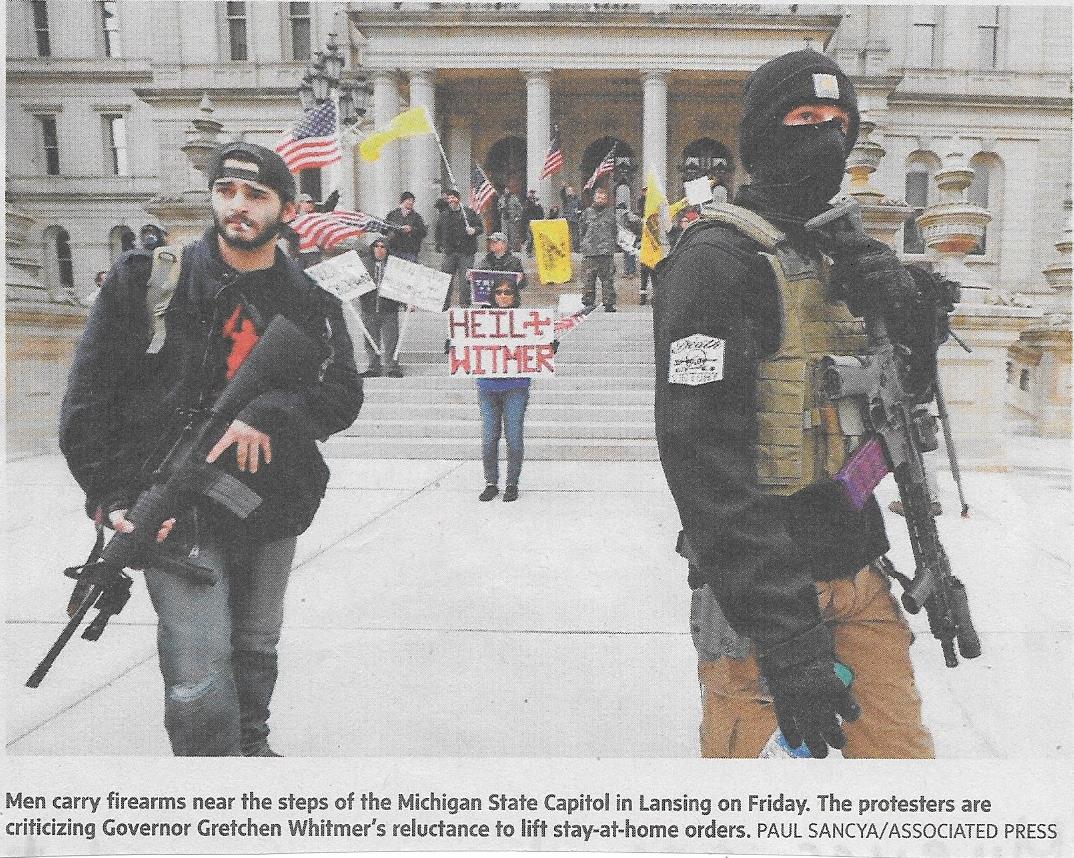 So it was with some astonishment that I saw this photograph in the Globe and Mail yesterday. It was part of a report discussing various demonstrations across the United States in support of immediately removing any requirement to self-isolate. The fact that so many people are becoming restive is not really all that surprising. I think most people would prefer to have their lives back to some sort of normalcy. What totally freaked me out was the idea that it was perfectly acceptable to carry a combat weapon to an otherwise legal demonstration in support of your right to disagree with government policy. What is more alarming is the sign in the middle of the frame which appears to call the state governor a Nazi for having the public well-being in mind when she instituted stay at home regulations. (Tellingly, her name is spelled wrong; It’s Whitmer.)
At one time I thought that the US was just like us. They were perhaps a little less reserved and more brash, but we fundamentally agreed about most things. More importantly, they were leaders of the free world; they set a moral standard and provided financial security for many of the world’s international organizations. But recently they seem to have lost their collective identity and direction in an explosion of inward-looking splintered self-interest. This factionalism starts at the top; the last almost 4 years have been unprecedented for the obstructionism, divisiveness, lack of morality and outright lying in the White House. And now much of the country has apparently disintegrated into disparate factions which argue endlessly about extremist views – apparently with military fire-power if necessary.
Some day we will be released from our temporary prisons. I have begun promoting a coffee, a glass of wine, or a lunch with my friends as a celebration of all that we will have been through together. It will take time, and the release will have to be phased over many weeks. Prime Minister Trudeau has recently confirmed that the border with the US will be closed until the end of May. It is at times like this that I value the “peace, order and good government” ethos of our country. Let the Americans pursue individual freedoms; at this point I would prefer a few more weeks of lock-down, however uncomfortable and inconvenient that may be.
* * * * * *
Or, put entirely more professionally, there is this article from The Atlantic Monthly: https://www.theatlantic.com/magazine/archive/2020/06/underlying-conditions/610261/