June 23: A few days ago, worker mate and good friend Roy and I were working on a new deck at the back of the cottage. An aluminum boat approached and the driver tossed an envelope on the dock in the manner of a guy delivering a daily newspaper. Sadly, it was not the news of the world which arrived, but rather promotions for local contractors and service providers and, most importantly for some, a magazine with the latest real estate listings in Muskoka.
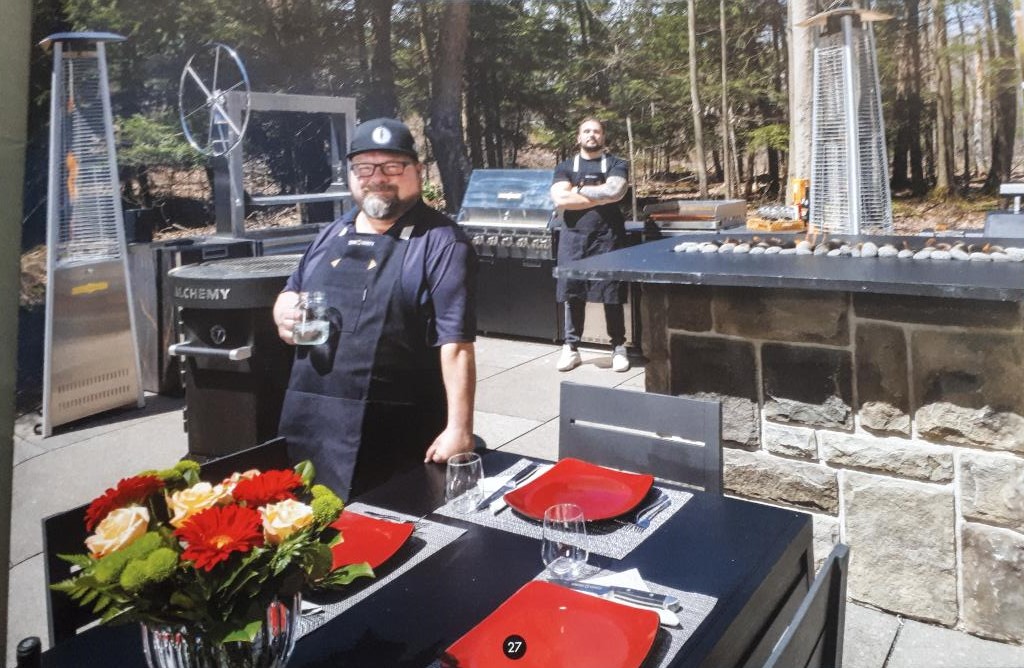 There were two glossy magazines. The first carried ads for cottages currently for sale, and the second was all advertisements for contractors, home decor experts, and service providers ready to take your dull and boring cottage life to new heights.
There is no doubt about the importance of the cottage construction and maintenance sector to the local economy. Stats Canada tells us that the construction industry is the biggest employer in the municipality of Muskoka, employing 5,310 people in 2021. The retail-trade industry employed 4,615 people, while the accommodation and food services industry employed 2,295 people. Cottagers spend a lot of money on maintaining and improving their summer residence – believe me, I know. What amazes me is the lengths people will go to “get away from it all” by creating monstrous “McMansions” for summer homes that bear absolutely no relationship to cottaging as I know it.
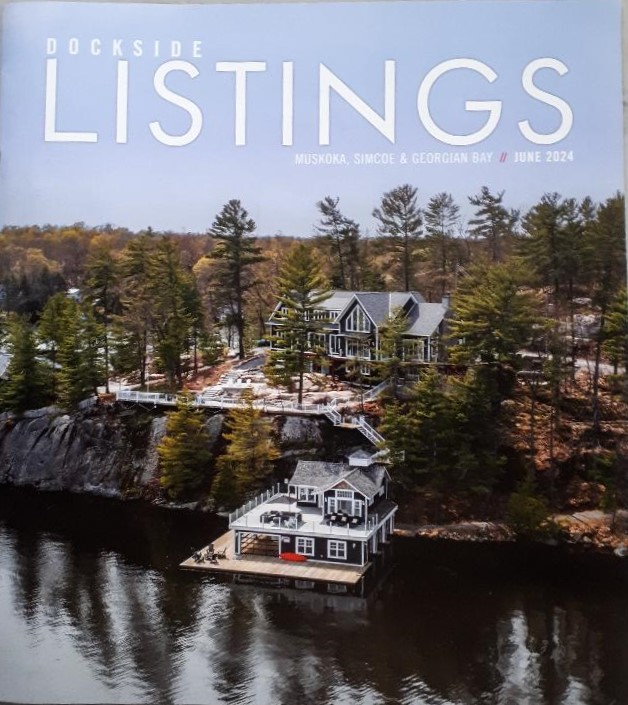 Case in point: this place featured on the cover of the real estate magazine. Four bedrooms and five baths, it features a lower-level recreation room complete with a home theatre, sauna, and gym, alongside an attached one-car garage. “The spacious kitchen is ideally set up for entertaining. The Muskoka room, a highlight with its wood-burning fireplace, opens onto a walkout barbecue deck. A golf cart pathway winds down to an impressive three-slip boathouse, which houses 2 bedrooms, an upper and lower bath, a kitchenette, and an inviting living area which leads out to a magnificent sundeck, offering a private space to enjoy the serene water views.” All yours for $10.5 million. And if you want more, there’s a neighbouring place for sale at $15.5 million.
I’m familiar with this property because it once housed a smaller cottage sitting alone at the top of the cliff right at the entrance to the Indian River leading into Port Carling. We saw it every time we went “to Port” and as a kid I often thought it to be a strange place for a cottage so high above the lake and with obvious problems accessing the dock for a swim. Apparently, these things are easily overcome with enough effort and money.
The property has been cleared of most of its mature trees, and the clifftop rock has been covered with acres of outdoor decking and the massive cottage. Where once there was a small cottage fitting in to the landscape, there is now a gigantic mansion visible for miles down the lake. What is being lost in that trade-off is what I believe to be the essence of cottaging itself.
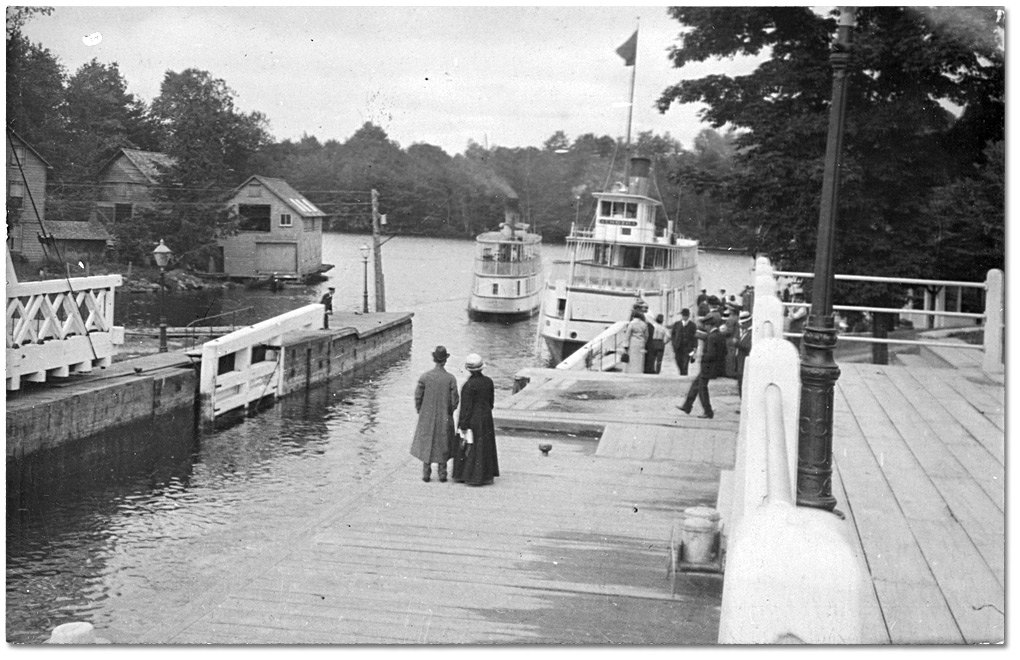 Muskoka has been a place where the well-off come to spend the summer since the days when they arrived by steamboat with family and servants in tow. Perhaps the cottages of that era were every bit as ostentatious in their time as the modern cottages are in ours, but to me, a major difference seems to be that previous generations built large cottages to be comfortable for their vacation, whereas the current generation are building cottages to display their wealth and and make a statement about status. The proliferation of these monster homes diminishes the character of the lakes and destroys the very things people will claim they come here to enjoy: peace, tranquility and being in nature. It’s hard to see the sunset from the basement movie theatre….
The battle for the soul of Muskoka – Macleans.ca
For sale: 1086 PENNWOOD Road, Muskoka Lakes, Ontario P0B1J0 – 40587127 | REALTOR.ca