June 22:
June 22:
May 16: Occasional reader(s) will know that I gauge the arrival of Spring by the full bloom of the Saucer Magnolia trees in my neighbourhood. On May 9 last year, with the tree at the end of the street in bloom, I concluded that Spring was “underway”. The weather was cold – one day above 20C in a month – and wet – 20mm of rain in 30 days. During this strangest of times, this years weather has not been much warmer or dryer.
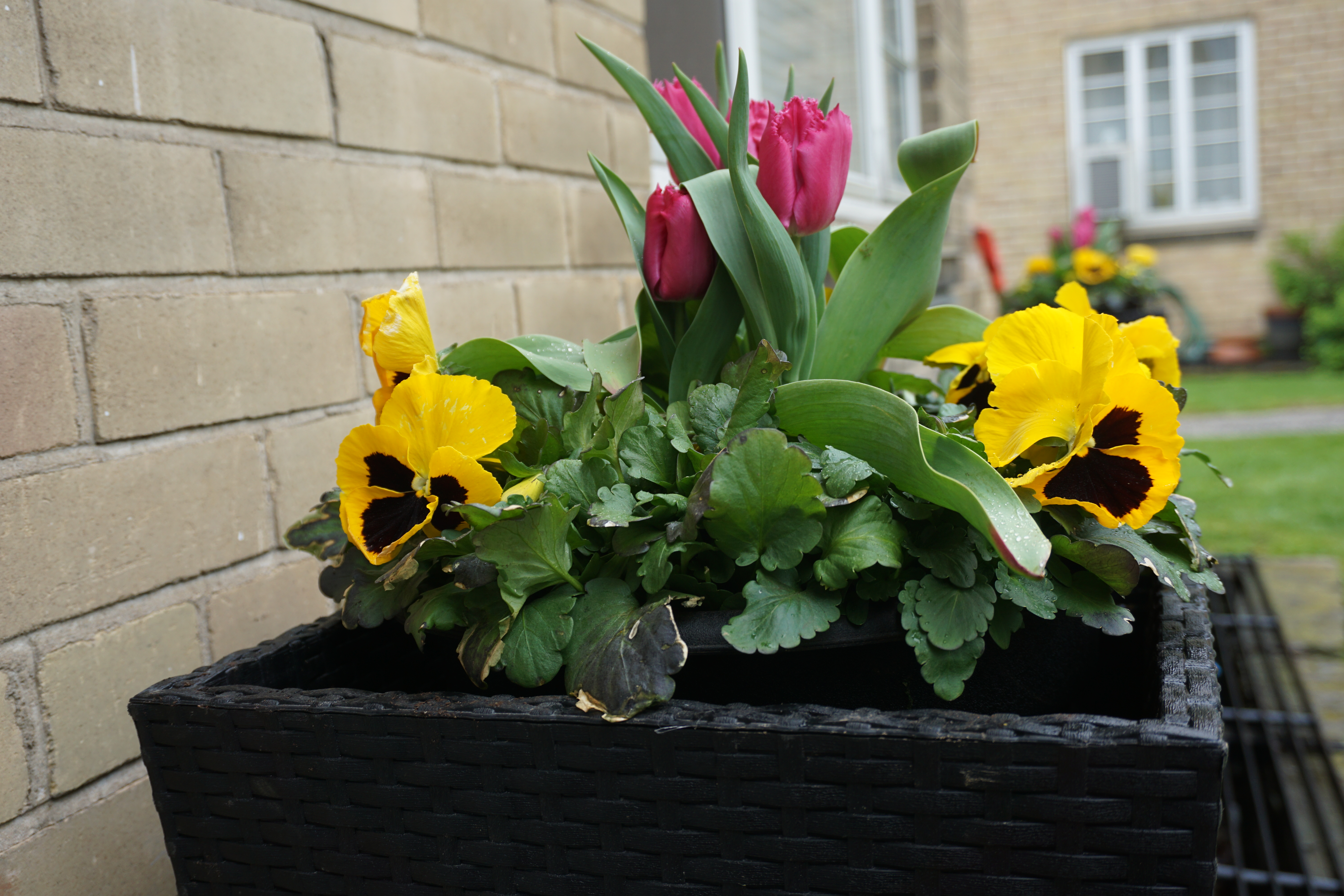 Since the Saucer Magnolias are now more or less in bloom, and this is the Victoria Day weekend, I suppose I can again conclude that Spring is underway if not yet fully arrived. As I think back to May Two-Four Weekends of years past I can recall some pretty poor weather, so I know that this time of year has always been “changeable”.
I’m sure that being in isolation has tended to focus my thinking on how poor the days have been. A period of warmer and drier days would let us get outside for a while and ease the feeling of being locked inside (for 9 weeks now). I know that I am not alone. My fear is that if the weather does turn suddenly warmer and clear, most people will abandon isolation and start thronging to public places. As we begin the process of easing separation, I could then foresee a rebound in the number of COVID cases and a further period of isolation.
So perhaps the lousy weather is a double-edged sword: discouraging and unpleasant, but easier to endure if we must isolate ourselves. It’s an exercise in patience however you think of it. Stay well.
April 30: A little over a week ago, memorials began appearing for the 22 people murdered in a shooting rampage in Nova Scotia. Some were extravagant bouquets of flowers; others more restrained and considered. In addition to flowers, teddy bears and dolls also made and appearance. In Toronto there were also memorials appearing, but they were outside senior’s homes and long-term care facilities.
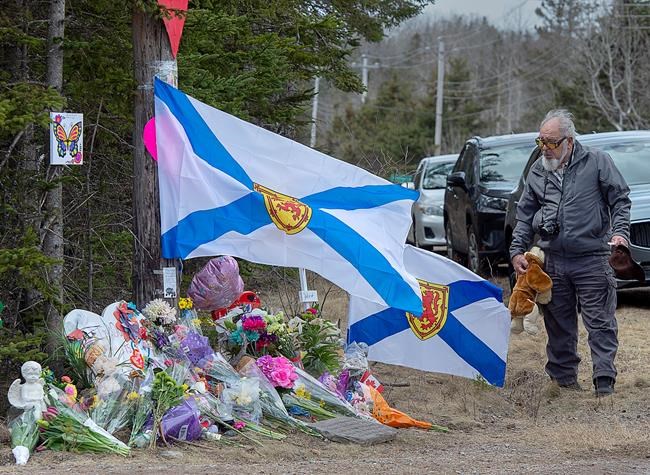
The events in Nova Scotia are tragic. The loss of 22 people at one time, and in those circumstances, touched a nerve in me and many others. The coverage on TV and in print showed the devastation left behind, and put names and faces to those we had lost. They became very real. It was especially difficult for me to accept the loss of RCMP officer Heidi Stevenson, not because she had some sort of special status or protection, but more because she represented us as an officer of the law, and paid the ultimate price for her service.
I feel the same way when we lose any of the first responder or military community. These are the folks that run toward the battlefields, the burning buildings and the car crashes so that we won’t have to face those horrors. When we lose them, we lose a part of our cultural safety net. Tributes to these folks are well deserved and I find them very emotionally difficult.
Not far from our home here in Toronto, 18 seniors died over the weekend in Meighan Manor, a long-term care building operated by the Salvation Army. I noticed the congruency of the number of dead (first said to be 18 in Nova Scotia), and was immediately struck by the lack of emotion surrounding that loss. Sure, there was a small number of floral tributes near the home, but the report glossed over the personal details of who we had lost in favour of the presumed shock value of the number. It played for a day in the media and was gone. While it was sad news and close to home, I felt little emotion or connection with those we lost; they had been reduced to data.
I think I understand why: there are now so many people dead or dying from COVID that it would be impossible to personalize all of them. Although the Globe and Mail and CBC news have run pieces with some details about those who have died, the psychological impact of seeing so many people identified each day would be traumatic for the rest of us as we struggle to retain our equilibrium while being locked indoors. That said, we shouldn’t lose sight of the fact that every one of those faceless numbers is in fact a loved and missed part of someone’s family, and a meaningful life no longer being live
* * * * *
As I write this there is news that 6 members of the Canadian Forces have been lost in a helicopter crash off the coast of Greece. Again, we know who they are; several are from Nova Scotia where the ship was based. This will undoubtedly be a difficult time for the province – its second tragedy in 2 weeks. Proportionately this would be the equivalent of losing 420 people in Ontario. My heart goes out to them.
April 19: As we enter the sixth week of our mandated regime of physical distancing and staying at home, thoughts are turning to a time when we will be released. At first, being forced to stay indoors was refreshing. It offered unlimited time to undertake all those projects that are waiting on the “to do list”. Much could be accomplished with time; new avenues and interests could be explored. Of course, most of that remains undone or unexplored, and the extended time alone has become tedious. And now as some of the numbers of infections and deaths are trending lower, talk at the political level is messaging a “return to normalcy”.
My sense of this, not being an epidemiologist, is that we will have allow people and businesses to return to operation in phases timed to coincide with tangible improvements in the rate of decline of the virus. Knowledgeable experts (i.e. not me) stress that it is not acceptable to allow that process to continue if the rate of (re)infection rises. This will need to be done carefully and with a good dose of social restraint and testing if it is to be successful.
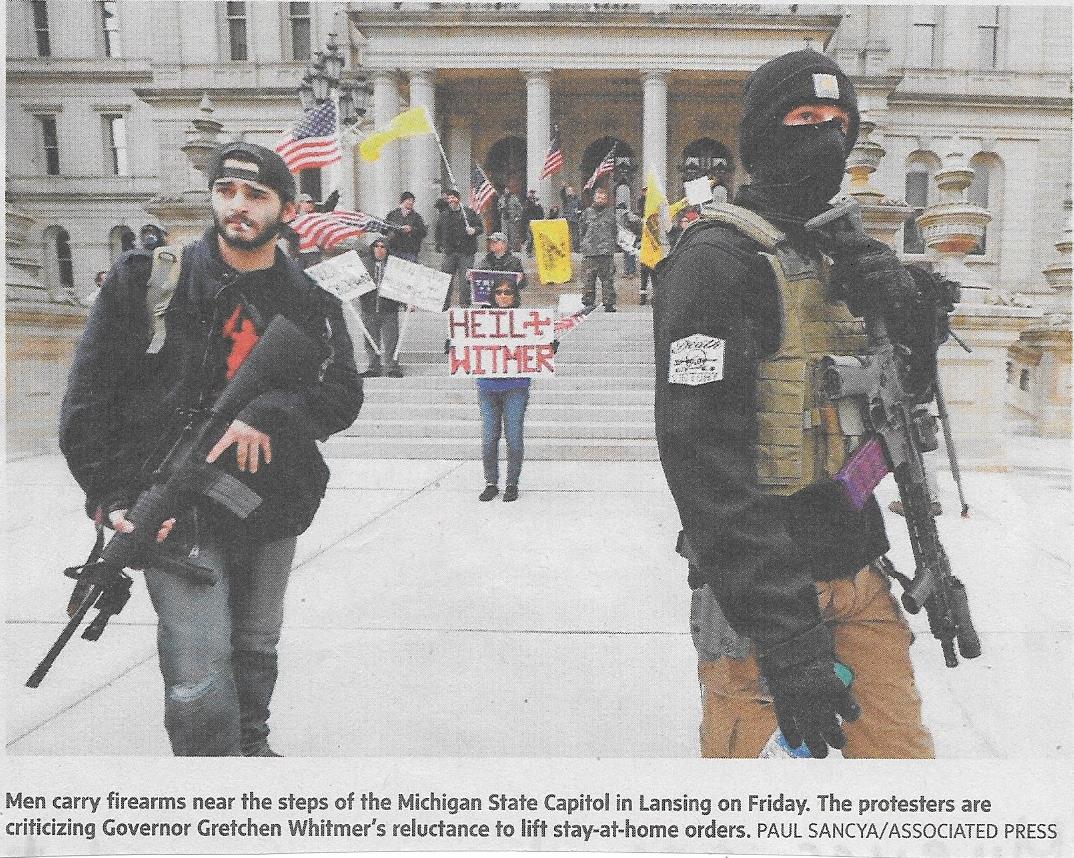 So it was with some astonishment that I saw this photograph in the Globe and Mail yesterday. It was part of a report discussing various demonstrations across the United States in support of immediately removing any requirement to self-isolate. The fact that so many people are becoming restive is not really all that surprising. I think most people would prefer to have their lives back to some sort of normalcy. What totally freaked me out was the idea that it was perfectly acceptable to carry a combat weapon to an otherwise legal demonstration in support of your right to disagree with government policy. What is more alarming is the sign in the middle of the frame which appears to call the state governor a Nazi for having the public well-being in mind when she instituted stay at home regulations. (Tellingly, her name is spelled wrong; It’s Whitmer.)
At one time I thought that the US was just like us. They were perhaps a little less reserved and more brash, but we fundamentally agreed about most things. More importantly, they were leaders of the free world; they set a moral standard and provided financial security for many of the world’s international organizations. But recently they seem to have lost their collective identity and direction in an explosion of inward-looking splintered self-interest. This factionalism starts at the top; the last almost 4 years have been unprecedented for the obstructionism, divisiveness, lack of morality and outright lying in the White House. And now much of the country has apparently disintegrated into disparate factions which argue endlessly about extremist views – apparently with military fire-power if necessary.
Some day we will be released from our temporary prisons. I have begun promoting a coffee, a glass of wine, or a lunch with my friends as a celebration of all that we will have been through together. It will take time, and the release will have to be phased over many weeks. Prime Minister Trudeau has recently confirmed that the border with the US will be closed until the end of May. It is at times like this that I value the “peace, order and good government” ethos of our country. Let the Americans pursue individual freedoms; at this point I would prefer a few more weeks of lock-down, however uncomfortable and inconvenient that may be.
* * * * * *
Or, put entirely more professionally, there is this article from The Atlantic Monthly: https://www.theatlantic.com/magazine/archive/2020/06/underlying-conditions/610261/
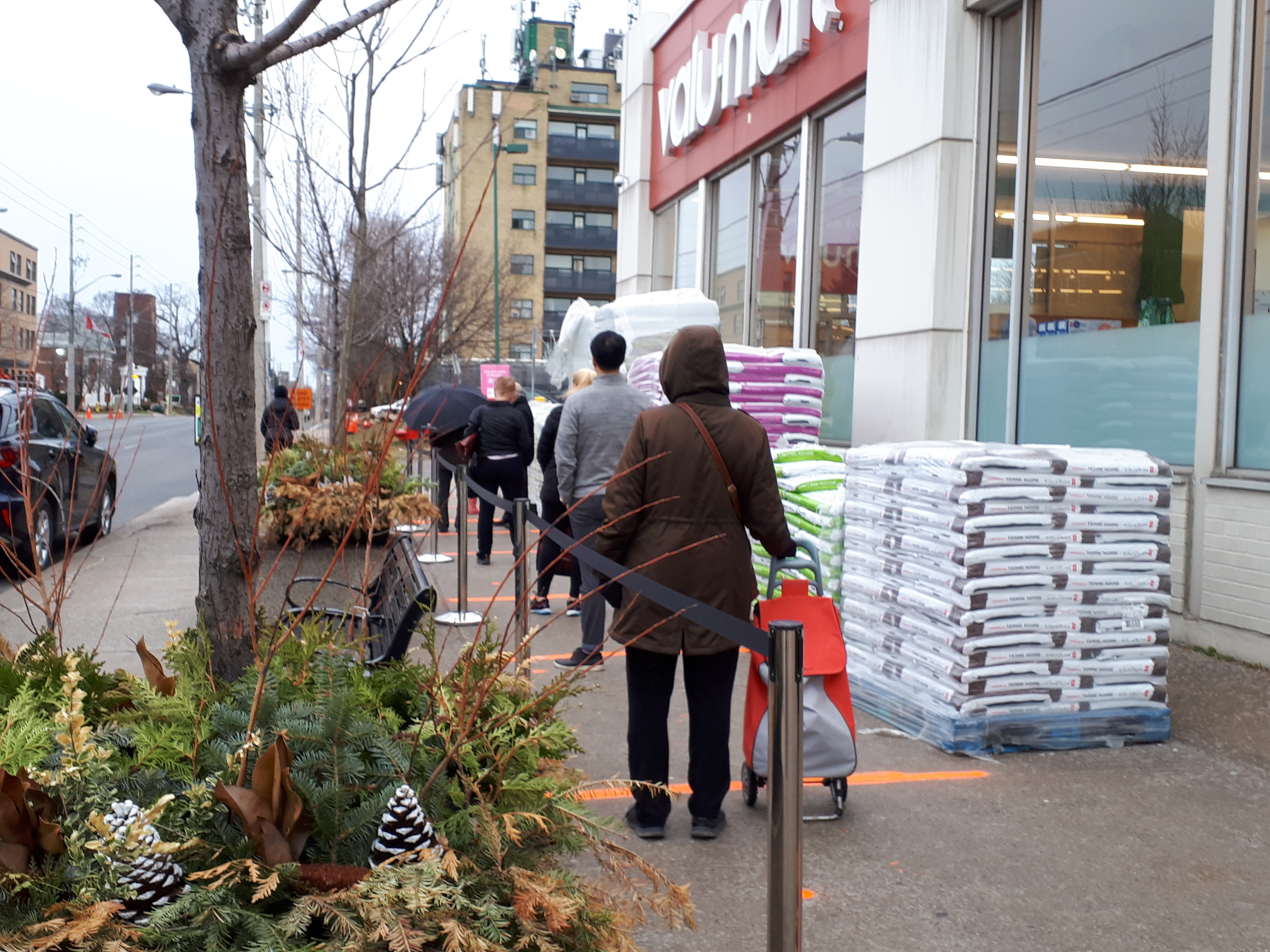
April 3: A couple of days ago, I encountered a strange new world while going to the grocery store. People were quietly waiting outside the doors, stationed the mandatory 2 meters apart. I’m sure that many of you have had a similar experience. As we all navigate our way through the COVID19 epidemic, I have heard many people make comparisons to war: we are mobilizing to face a common enemy; industry is being conscripted to produce materials we need to continue the fight; people are being asked to sacrifice comfort, personal freedoms and perhaps their very lives for the “common good”.
 While the analogy to war may be apt, most of us have no direct experience of war beyond the stories of our parents to draw upon. But as I thought about it a bit more I realized that there are perhaps parallels to the level of anxiety many of us felt during the 1962 Cuban Missile Crisis.
I was 12 years old and in Grade 7 at Deer Park School. I was old enough to understand some of the issues that triggered the crisis and, while I knew that it was “a big deal”, I think that I was young enough that I didn’t pay much attention. In time, the ominous newspaper headlines, TV broadcasts and the generalized angst I felt in the adults around me began to permeate my thoughts. Even as relatively young children, I think that, as the crisis deepened day-by-day, we all knew on some level that we would not survive an attack if it were to happen.
In preparation for a possible attack, the government began testing the air raid sirens. This seemed to happen at random intervals and underscored in me the idea that an attack could happen at any time and without warning. Preparations and drills started at the school and I’m pretty sure that my parents were making ready at home as well. I recall the anxiety I felt if I was separated from them for very long. I think we all realized that if an attack happened, we wouldn’t be able to run home from school to Mum and Dad. We would likely face the consequences alone.
 As students in Grade 7, we were in a room on the second floor of the school. When the alarm was sounded, we left our classroom and went down to the ground floor hallway (actually a 1/2 below grade level) where we were told to sit with our backs against the wall. One of the students asked a teacher whether there was a basement level, and whether we wouldn’t be safer down there. She replied that there was a basement, but if there was an attack, the swimming pool would flood the basement and we would all drown. Even as 12-year-old’s we clearly understood that an attack would mean the end of us, either by drowning or being blasted to smithereens.
Over the next 14 days or so, the tensions ratcheted up. The crisis began to feel like standing too close to the tracks as a freight train passes. And just like the train ends, Russia blinked, and the crisis ended on October 28. Life returned to “normal”. I think for many of my generation it was a defining moment that introduced us to “global politics” and the realization that so much of what happened around us had huge consequences that were totally beyond our control.
Much of that feels quite familiar in a COVID19 environment. News and television reports highlight the most recent bad news. Things are changing rapidly and seemingly at random. We’re told to take measures to prepare for the worst, and there is a sense of inevitability as the pandemic spreads. While many people – like me – perhaps naively believe that there is a relatively low chance of contracting the disease, there is a level of anxiety in our society that I have not seen since ’62. Every conversation begins with 20 minutes of discussion about the latest developments or miracle cures or how to sanitize your groceries. It’s relentless.
In the end, the pandemic will end. Unlike the Cuban Missile Crisis which ended on a specific date, the pandemic is likely to ebb and flow for a while (perhaps as long as 2 years). Although changed forever in many ways, life will return to normal – whatever that might be. In the meantime, pack your patience, and keep your distance.
March 20: I have come to realize that I am fundamentally an optimist. I tend to default toward believing that things will work out for the better; if left to their own devices, people will do the right thing more often than not.
So it was with some hopefulness that I thought about the lifting of the rail blockades a few weeks back. After a protracted and wrenching stand-off, there appeared to be agreement between the First Nations, the Feds and the companies involved on a way to remove the blockades and move forward.
It seemed that the Feds were finally acknowledging the sovereignty of the First Nations and the need to have their agreement for any major works within their territories. This process seemed to be – and I hate to use the word – a significant step toward reconciliation. The First Nations seemed to accept that they needed to get their act together and come to a common position in negotiations with peers. It also seemed that there was the real possibility that they would come to the table as partners in resource development with major corporations, and finally secure access to sustainable income and a way to participate in the larger economy.
There remained issues at the Provincial level – this is Canada after all – but it seemed that the oil and gas market was shifting just enough that Alberta was being forced to confront the fact that their carbon-based economy couldn’t last forever.
Then COVID19 intervened. For the last few weeks, there has been news of nothing else. It has sucked all the air out of the room and become, as Cathal Kelly said in the Globe, a loud and constant buzzing in the back of your brain. Almost simultaneously, Saudi Arabia and Russia started a price war over oil. This, along with the forced shut down of significant parts of the economy due to the virus, has hammered the global economy. We may be on the brink of a global recession. Oil prices have plummeted to their lowest level in decades. Alberta crude, already in trouble at $32 a barrel, is today trading near $9.
So where does this litany of woe leave an optimist like me ? As an optimist, I have to assume that the Feds and the First Nations are at least continuing to think about hammering out an agreement around resource development and sovereignty (among other critical issues) while they also grapple with the virus. I am hopeful that the First Nations respect for the land will imbue future resource development with a more sustainable perspective. I hope that, as partners, those communities can begin to participate more fully and more equally with the rest of the country.
I also hope that forcing the Federal and Provincial governments to deal with the COVID19 virus and the plunging economy in a coordinated fashion will dispel some of the regional hostility that was apparent even a few weeks ago. There has to be an understanding that we are all in this together and that we are more alike than different. Perhaps taking some of the “politics” off the table will turn out to be a good thing.
As well, I am hopeful that the extremely low oil prices and the latest round of financial assistance this crisis has spawned will begin a transition away from oil extraction and toward a more sustainable future. The Feds are proposing to fund the clean-up of orphaned wells, of which there are many thousands across the country. Hopefully, Alberta will also find ways to provide employment for oil field workers in alternative energy environments.
Finally, on the global stage, perhaps the global viral epidemic has cost China enough “face” that they will be chastened for at least a while in their global ambitions. Given the interdependence of our economies and the battle against COVID 19, perhaps channels have now been opened that will allow us to see each other as residents of the world, rather than members of opposing camps.
There’s so much going on these days that it’s hard to keep track of the latest (correct) information. In the face of so much adversity, it’s often difficult to be optimistic and hopeful for our future, yet I try. If I squint at these problems just right, I begin to see opportunity. I can only hope that there are others out there who feel the same way, and that major beneficial change can come from our current struggle.
March 12: A small group of friends have been kidding each other over the years about our investing acumen. Many years ago, a couple of them found a small drug company that they felt certain to be on the verge of announcing a major breakthrough. With much anticipation they bought in and – of course – within days the company was bust. I contributed to the litany on woe by buying Nortel at the absolute apogee of it’s climb up the markets. I was told by everyone that I spoke to – including the brokers I used – that it was safe and would not lose money. Within weeks it was headed down and I was told to hang on to it: “It will recover in time.” We know how that ended. Obviously, the collapse of Nortel was entirely my fault.
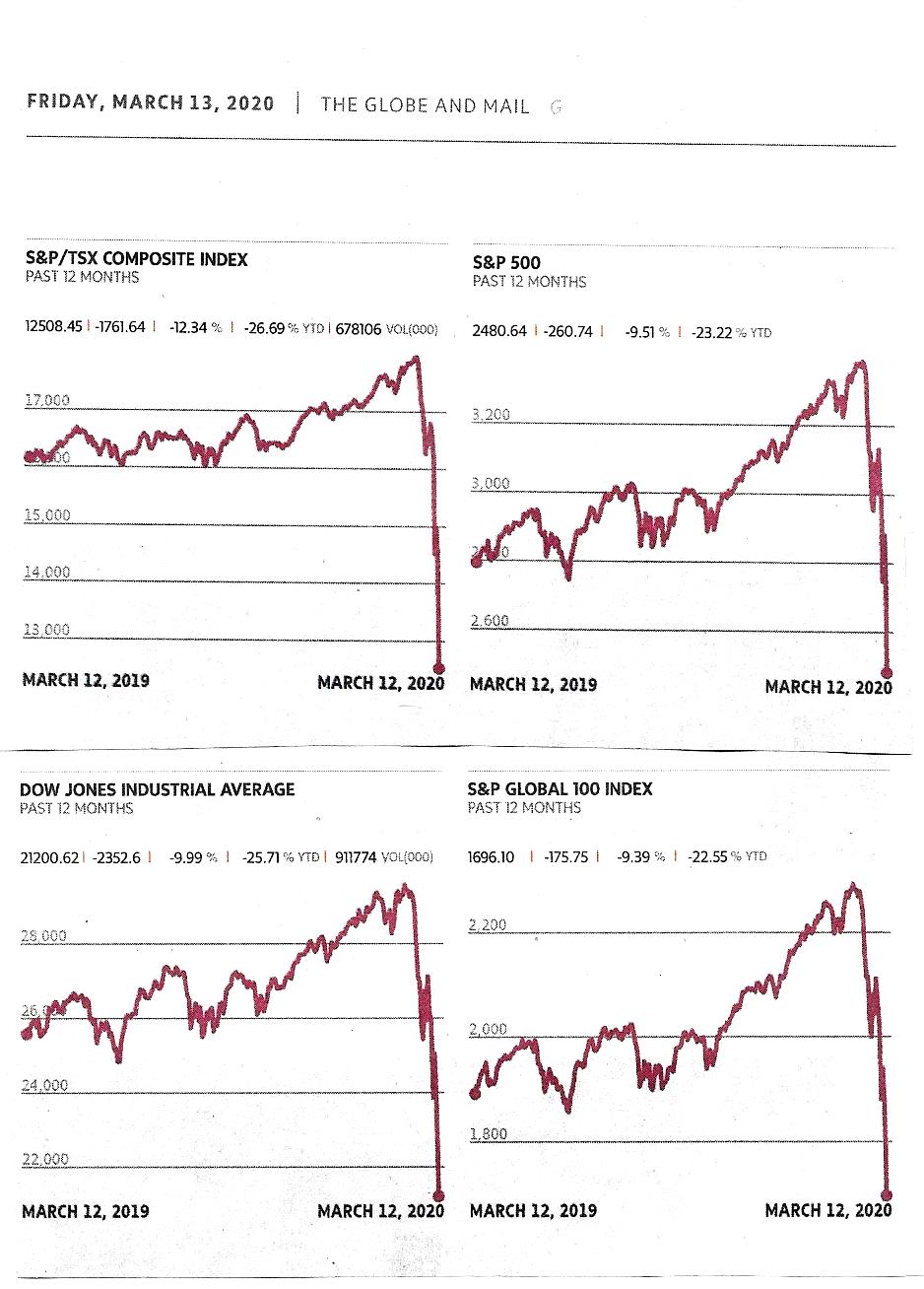
So it was that last week I decided to invest a very small sum in and ETF that tracked the TSX 60. The market had wobbled a bit and had been down for a few days so I thought that it might be time to put some money in “near the bottom”. The very next day it dropped 30% so obviously I had not lost my touch with the markets. Like most people, I was not amused, but I was comforted by the thought that things will ultimately return “to normal” and markets should recover over time.
Then that moron in the White House went on national TV to reassure people. The markets fell off a cliff the moment he began speaking in the Oval Office and had their worst downturn in 80 years. I thought I was good at wrecking the market but perhaps he’s right: he is a genius. He takes destruction of value to another level entirely.
Anyway, it is what it is. I am not alone. Others have far more at stake, and are suffering much more dire consequences than me. In time, things will return to normal – whatever that turns out to be. In the meantime, stay healthy. Wash your hands. Be good to each other.
February 22: Over the last few days, daily temperatures have begun to reach mid- to high-single digit territory. Daylight is more intense and now extends well past 6 PM. If you can find a spot out of the wind, the sun is noticeably warmer. Near our home there is a row of tiny green shoots poking out of the soil; the buds on the Saucer Magnolia at the end of the street are engorged and covered with tender fuzz. Squirrels on the courtyard are scrambling around gathering mouthfuls of leaves as they prepare their nests for this years’ litter of pups which will be born in the next few weeks.
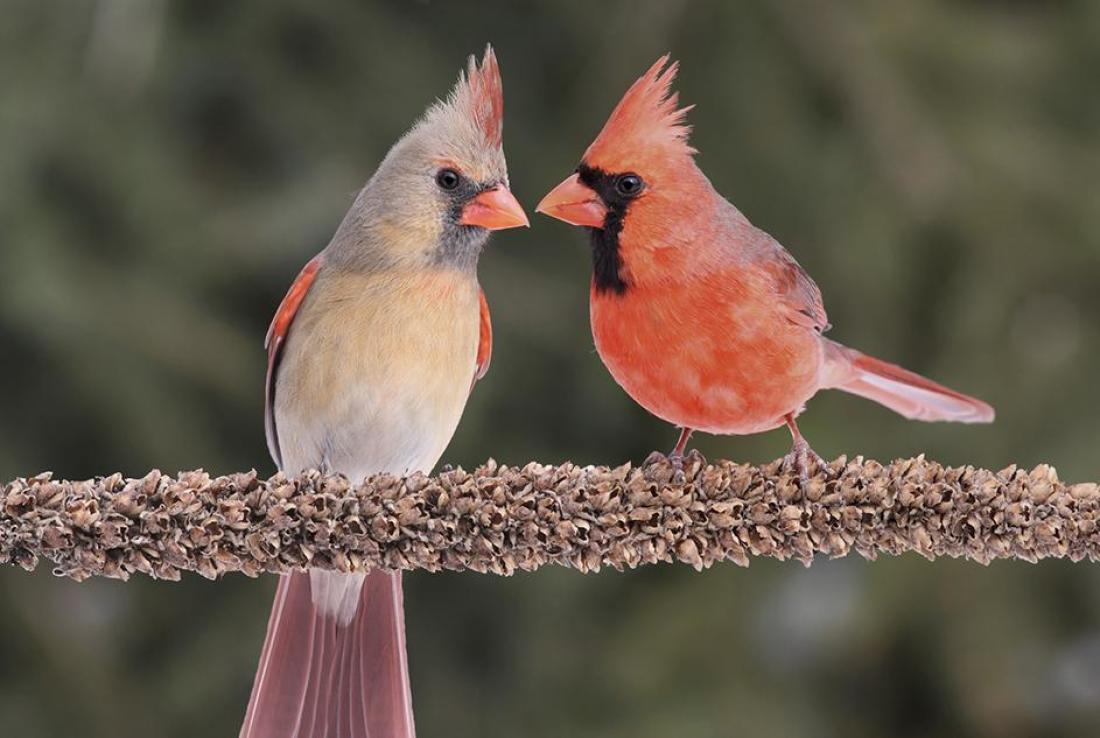 It was the familiar call of the Cardinals that alerted me to all this activity. I really should have expected to hear it because they started singing during the same week last year. Cardinals are very industrious and their call is well known; a long and descending phew followed by repeated whit, whit, whit notes. During the summer I often hear them before dawn – usually before sunrise and before those lazy Robins are half-awake. When I lived in the Lakeshore, this was also the time when Red-winged Blackbirds returned and began nesting for the season. Unlike Cardinals, they are migratory and among the first to return to face late blizzards and still-freezing temperatures.
While the birds are interesting to many including myself, all of the signs of Spring are quite predictable. Bulbs sprout, blossoms bloom and animals nest on a regular schedule if we are attuned enough to simply see them happening. Left to her own devices Mother Nature is very resilient and will continue to do what she does best in spite of our interference. So my advice, for what it’s worth, would be to get out there and enjoy the rebirth happening all around us. Keep your eyes and ears open to the changing seasons; a wonderous pageant is unfolding.
February 27: Then again …..
https://www.allaboutbirds.org/guide/Northern_Cardinal/overview
https://www.allaboutbirds.org/guide/Red-winged_Blackbird
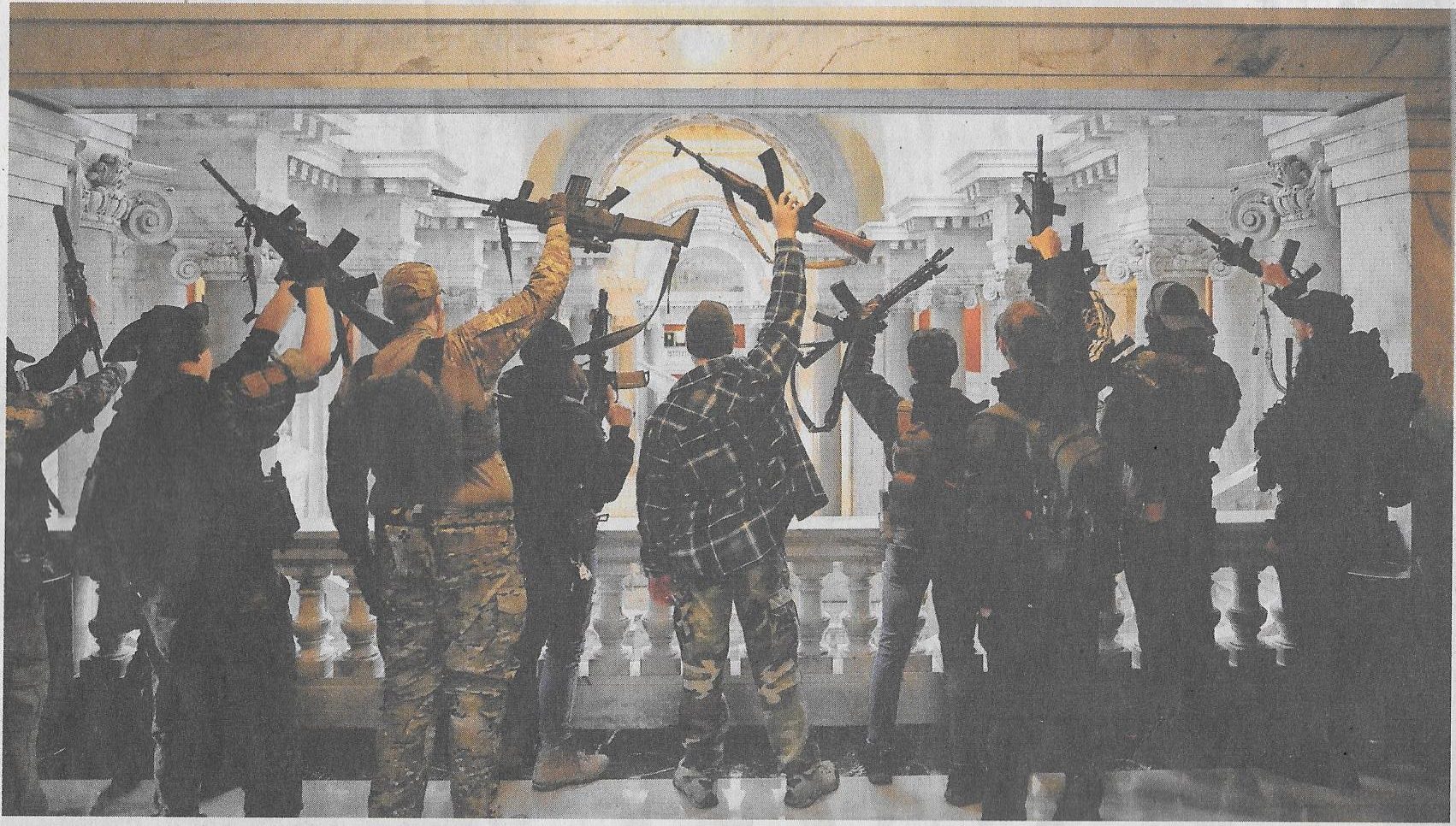
February 1: When I first saw this picture in the Globe and Mail this morning I thought it was of a militia somewhere in the middle east. I was wrong: It turned out to be a Second Amendment demonstration inside the capital building in Frankfort, Kentucky. Clearly, this is not a gathering of thoughtful and concerned citizens raising a philosophical argument about gun control. It’s about intimidation and the threat of possible consequences.
I’ve seen video of some gun ownership advocates arguing that this type of weapon is really only used for target practice or shooting deer. They must have some seriously aggressive deer in Kentucky if you need that sort of power to bring them down. Whatever their intended use, advocates always seem to speak in a menacing and vaguely threatening tone, as if to say “I have a gun and I’m not afraid to use it ….” Against you.
Until recently, I believed that Canada had a different frame of mind when it came to gun control. Now, I’m not so sure. I recently watched a TV report from western Canada which included interviews with several reps from the gun ownership lobby and the parallels in argument and language with their American counterparts was striking. I found it extremely worrisome because, unlike the United States, we have no “right to bear arms”. It’s a privilege.
At one time, long guns were registered. But, in what was clearly a move that pandered to rural voters, the long-gun registry was dismantled by our former Glorious Leader Harper, thereby removing one tool that Police might have used to track dangerous weapons. Roughly 7.5 million weapons were removed from government records. I suspect that, here in Canada, relatively few citizens are killed by rifles or shot guns. So arguably at least, perhaps there was not a lot to gain from registering these weapons. Farmers and hunters have a legitimate reason to arm themselves; life here in the city is different.
In Toronto last night, 3 people were shot to death at a house party. Little is known as I write this. The victims are all in their early 20’s. They were at a rented Airbnb when things went sideways. For whatever reason, someone felt sufficiently aggrieved to haul out a pistol(s) and try to settle the score. Clearly, the guns in question were not intended for hunting or target practice; I suspect they were “rented” from organized crime (like gangs) and smuggled into our country from the USA.
The Toronto Police Service reported 492 shootings last year resulting in 44 deaths and 246 people injured – that’s roughly 10 shootings a week with at least 5 people wounded or killed. The Police suggest that if we are not involved with gangs or crime, the chances of being a victim are slim, yet I am now seeing reports of “unintended victims” with greater frequency. Mayor Tory has been pushing for a handgun ban for some time, and the Federal parties have both been ragging the puck for far too long. The gun lobby would suggest that banning handguns would only penalize law-abiding owners, and to an extent, I understand that argument. That said, I think the time has come for us to do something about the spread of weapons in this country. I don’t ever want to see an armed militia on Parliament Hill. We are better than that.
The Globe and Mail weighs in:
https://www.theglobeandmail.com/opinion/editorials/article-on-gangs-and-guns-politicians-are-missing-the-point/